From behind the wheel, the first thing you notice is how little drama a good compact SUV needs to create. The 2026 Toyota RAV4 is designed to slip into daily life rather than dominate it, carrying groceries, luggage, and school equipment with the quiet competence that made earlier RAV4s so popular. I have not driven a production example yet, so this is a carefully grounded preview rather than a completed road test. Still, the new model's direction is clear: more electrification, fresher styling, and fewer compromises for buyers who want a practical Toyota without moving up to a Highlander.
What is new for the 2026 Toyota RAV4?
The 2026 Toyota RAV4 represents a major redesign for one of America's best-known compact crossovers. Toyota has indicated that the new generation will focus entirely on electrified powertrains rather than offering a conventional gas-only version. That means shoppers should expect hybrid and plug-in hybrid choices, with an electric variant positioned as a separate but closely related option in the broader lineup.
That change matters. The previous RAV4 Hybrid already offered a useful blend of fuel economy, all-weather confidence, and reasonable acceleration. A plug-in model, sold previously as the RAV4 Prime, gave buyers stronger performance and the ability to complete many short trips without starting the engine. For the 2026 Toyota RAV4, Toyota appears to be treating electrification as the default rather than the premium experiment.
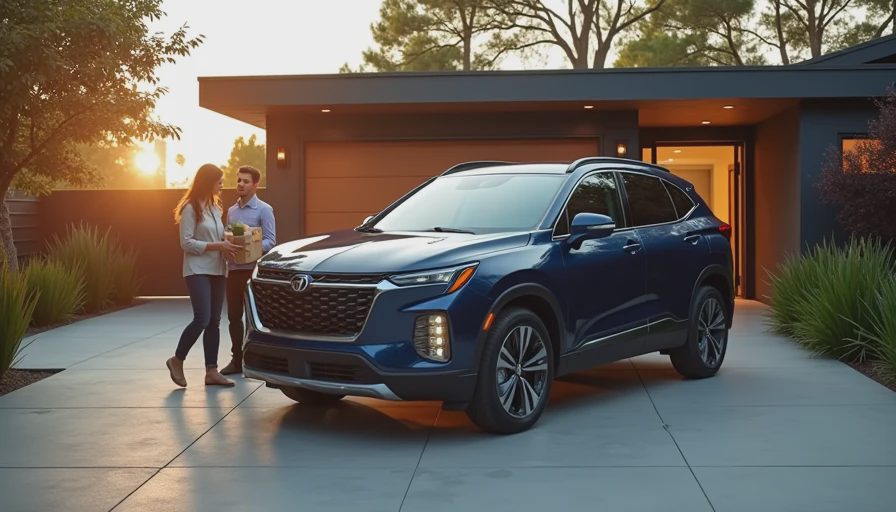
The exterior is more squared-off and truck-inspired than the outgoing model, although it remains recognizably a RAV4. The sharper nose, cleaner side surfacing, and revised rear treatment should help the SUV look more substantial without making it difficult to park. This is a smart direction for Toyota. The old model was easy to recommend but visually familiar; the new one needs enough freshness to justify its place in a crowded showroom.
Powertrains, range, and real-world efficiency
The 2026 Toyota RAV4 will be sold in hybrid and plug-in hybrid forms, with front-wheel-drive and all-wheel-drive configurations expected depending on trim. Toyota has not released every final specification for every U.S. version, so exact horsepower, battery capacity, electric range, and EPA fuel-economy figures should not be treated as settled until the official ratings arrive.
The mechanical recipe is familiar. Toyota's hybrid system combines a gasoline engine with electric motors and a battery pack, using regenerative braking to recover energy in traffic and around town. In practice, that system's strongest qualities are smooth low-speed response and efficient stop-and-go operation. It is not the same experience as a traditional automatic transmission, but most RAV4 buyers will appreciate the seamless operation more than they will miss gear changes.
The plug-in hybrid should appeal to drivers with predictable commutes and home charging. A daily trip of roughly 20 to 40 miles is the kind of use case that can make a plug-in worthwhile, particularly when charging is available overnight. Longer journeys still benefit from gasoline backup. The trade-off is price: a larger battery, additional hardware, and more equipment usually push the plug-in model well above a standard hybrid.
There is no honest 0-to-60-mph time, emergency-braking distance, or observed mpg figure to report yet. Those numbers require a production vehicle, controlled testing, and enough miles to establish a fair result. Expect the hybrid to prioritize economy over sport, while the plug-in version should feel quicker when its electric motors are contributing fully. Whether it is genuinely entertaining will depend on steering calibration, body control, and brake tuning, not merely on the power figure.
Interior space and everyday usability
The 2026 Toyota RAV4 has a difficult assignment inside: modernize the cabin without abandoning the practical layout that made the nameplate successful. The expected result is a cleaner dashboard, a larger central display, and more storage-oriented design. Those changes are welcome, but screens alone do not make a good interior. The important questions are whether the climate controls remain easy to use, whether the driver's sightlines stay clear, and whether the rear seat remains comfortable for adults.
Cargo capacity will be especially important in hybrid and plug-in versions. Battery hardware can consume space beneath the floor or rear seat, so Toyota must preserve a flat load area and useful underfloor storage. A family should be able to fit a stroller, two medium suitcases, and several grocery bags without resorting to a roof box. The RAV4 has traditionally been good at this kind of ordinary work, and the new model cannot afford to lose that advantage.
Material quality should improve in the upper trims, but buyers should be cautious about paying luxury-car money for a compact Toyota. A well-equipped XLE or similar midlevel trim is often the sweet spot in this class. The premium versions can add leather-like upholstery, a better audio system, panoramic glass, and advanced parking features, yet those extras can quickly add several thousand dollars without changing the basic utility.

How the 2026 Toyota RAV4 compares
The 2026 Toyota RAV4 will face a serious group of alternatives. The Honda CR-V remains a benchmark for ride comfort and interior packaging, while the Hyundai Tucson and Kia Sportage offer generous equipment and long warranties. The Subaru Forester continues to attract buyers who value standard all-wheel drive and a clear view outward. The Ford Escape is no longer the same direct competitor it once was, but its hybrid strategy showed that mainstream buyers will consider electrified compact SUVs when the pricing makes sense.
Toyota's advantage is likely to be system familiarity. The hybrid powertrain has been refined over several generations, and Toyota has a broad dealer network with experience servicing electrified vehicles. That does not guarantee the lowest ownership cost or the best driving experience, but it reduces uncertainty for buyers who plan to keep a vehicle for eight or ten years.
The main concern is value. If the 2026 Toyota RAV4 starts substantially above the outgoing model, shoppers will need to compare financing, fuel savings, and equipment carefully. A less expensive gas-powered competitor can still make financial sense for low-mileage drivers, especially those without access to home charging. Conversely, a plug-in version becomes more compelling when a household can charge consistently and use electric power for most weekday travel.
Expected pricing and which trim makes sense
Toyota has not finalized every U.S. price at the time of this preview. A reasonable expectation is that the standard hybrid will occupy the mainstream portion of the lineup, with higher trims reaching the upper $30,000s or beyond once destination charges and options are included. Plug-in models should command a meaningful premium. Federal, state, or local incentives could affect the final calculation, but eligibility rules change and should be verified before purchase.
For most buyers, the sensible choice will be a midlevel hybrid with all-wheel drive if winter weather, steep driveways, or gravel roads are part of regular life. Front-wheel drive should be enough for many urban and suburban owners and can reduce cost. The plug-in deserves consideration when daily mileage is predictable, charging is convenient, and the buyer expects to keep the vehicle long enough to benefit from its efficiency.
The Verdict: pros, cons, and whether you should actually buy one
Pros. The 2026 Toyota RAV4 should deliver a broad hybrid lineup, familiar Toyota ownership, useful cargo space, and a more distinctive exterior. The plug-in model could be the most appealing choice for households that can charge at home, while the regular hybrid remains the likely volume seller.
Cons. Final pricing, EPA figures, electric range, ride quality, and real-world performance remain unconfirmed. The cabin may still rely too heavily on hard plastics in lower trims, and buyers could pay a steep premium for the most desirable equipment. There is also no replacement for a proper independent test drive.
Bottom line. The 2026 Toyota RAV4 looks like a strong evolution rather than a revolution. I would wait for confirmed pricing and instrumented testing before ordering one, but the hybrid deserves a place on every practical SUV shopper's list. If Toyota preserves the outgoing model's easy usability while improving refinement, this new RAV4 will be a sensible buy. Score for this preview: 7.5 out of 10, pending road-test data.