MotorTrend’s Latest Comparison Tests Prove One Thing: Similar Badges Don’t Mean Similar Cars
The first clue comes through the steering wheel: two vehicles can share a mission statement, a price neighborhood, even corporate DNA—and still talk to you in completely different dialects once the road starts pushing back.
That’s the thread running through MotorTrend’s current Car Comparison Tests lineup, a page that reads like a rolling argument against lazy equivalencies. The headlines alone make the point. A Kia Telluride Hybrid and Hyundai Palisade Hybrid might look like fraternal twins on paper, but MotorTrend is already telegraphing the punchline: “Similar SUVs, Different Feel, One Winner.” Same roots, different attitude. And when the stakes are higher—say, pitting a 2026 Chevrolet Silverado EV Trail Boss against a Ram 2500 Power Wagon “in the Dirt”—the question isn’t just which one is “better,” but which one is honest about what it is.
MotorTrend’s comparison page (updated with entries stretching from Dec 2025 through Apr 2026 in the supplied list) is essentially a catalog of modern automotive identity crises: EVs trying to be trucks, hybrids trying to be adventure rigs, and performance cars still doing the old-fashioned job of making your brain shout unprintable words.
What You’d Do With It Matters More Than the Badge
Start with the tests that hit closest to where American buyers actually live: three-row family haulers and compact SUVs.
On Apr 6, 2026, MotorTrend ran “Kia Telluride Hybrid vs. Hyundai Palisade Hybrid: Similar SUVs, Different Feel, One Winner.” Even without the full results in the provided source snippet, the framing is telling. Telluride and Palisade have long been the sensible-alternative darlings in the three-row space, and hybridizing them adds a new layer of expectation: smoother torque delivery, better efficiency, and a more premium “effortless” vibe. But the “different feel” language is the important part, because that’s what separates a vehicle you respect from one you actually want to drive every day.
A similar idea shows up on Nov 21, 2025: “2026 Hyundai Palisade vs. Buick Enclave vs. Chevrolet Traverse: Details Matter and Only One Gets Them Right.” That’s an old-school comparison-test thesis if there ever was one. In this segment, nobody’s buying based on Nürburgring lore; they’re buying based on second-row access, ergonomics, powertrain calibration, and whether the whole thing feels like it was finished by adults. “Details matter” is polite code for: one of these cars did the homework, and the others showed up with nice handwriting and wrong answers.
Then there’s the Jan 9, 2026 matchup: “New VW Tiguan vs. Subaru Forester Hybrid: Which Compact SUV Won Us Over?” This is where the market is headed—mainstream crossovers, increasingly electrified, increasingly defined by how they drive rather than what their spec sheets claim. A Tiguan traditionally sells a certain Germanic on-road composure; a Forester Hybrid promises efficiency with Subaru’s brand of practical traction-and-visibility sensibility. MotorTrend’s “won us over” framing suggests the win isn’t just numerical—it’s emotional, which is exactly how real buyers decide.
The Off-Road Arms Race Gets More Specific (and More Weird)
The enthusiast world loves clear categories. The market, however, loves blurry ones.
MotorTrend’s Jan 14, 2026 comparison—“2026 Honda CR-V TrailSport vs. Toyota RAV4 Woodland vs. Subaru Forester Wilderness: Bite-Size Bushwackers”—puts a spotlight on the new reality: manufacturers are selling off-road credibility in smaller, more commuter-friendly portions. You’re no longer choosing between a crossover and a body-on-frame bruiser; you’re choosing which crossover trim package best matches the dirt road you might take twice a month.
And MotorTrend doubles down on the idea of “off-road-ish” trims with “Honda Passport TrailSport vs. GMC Terrain AT4: Two Off-Road Trims, One Clear Winner” (Nov 19, 2025). That title is refreshingly blunt. The segment is full of cosmetic toughness—knobby-looking tires in marketing photos, black cladding by the acre—but only some of these packages deliver meaningful hardware or calibration changes. If one is a “clear winner,” that implies the other is, at best, dressing for a job it doesn’t intend to do.
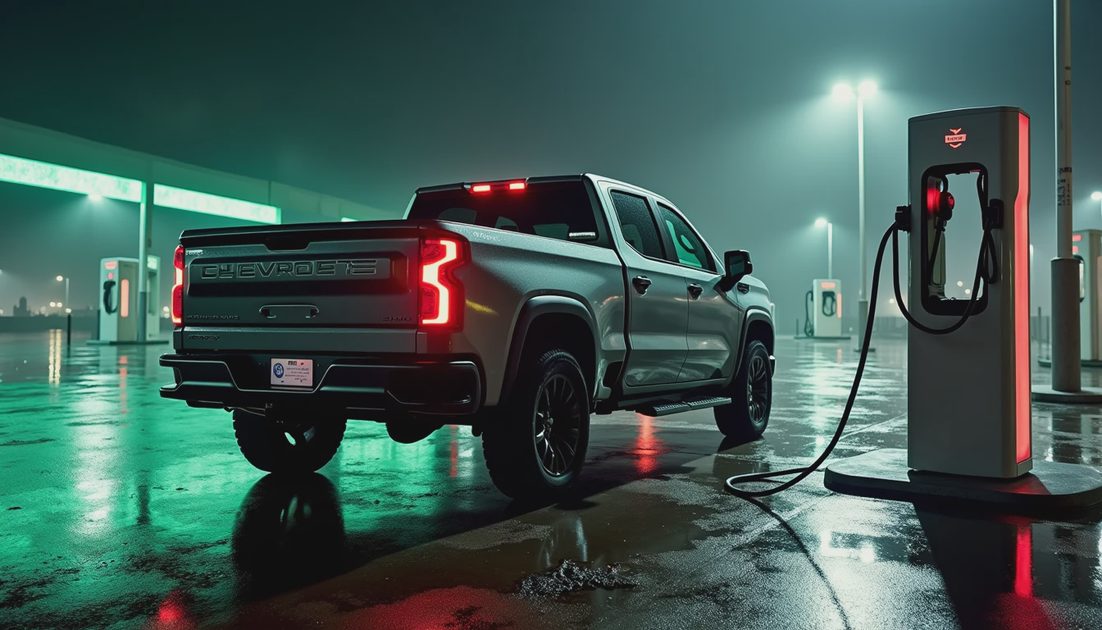
For the heavy stuff, the Mar 4, 2026 test “Battle of Brutes: 2026 Chevrolet Silverado EV Trail Boss vs. Ram 2500 Power Wagon in the Dirt” is the kind of comparison that makes purists complain and engineers grin. An electric truck variant wearing an off-road badge going after a purpose-built, internal-combustion off-road heavy-duty icon is inherently provocative. It also reflects what shoppers are actually asking: Can an EV deliver off-road control and durability in the same conversation as a traditional 4x4 benchmark? MotorTrend’s choice to run that test says the question is no longer hypothetical.
Performance Tests Still Chase the One Thing You Can’t Spec-Chart
What I like about MotorTrend’s performance comparisons in this list is that they’re not pretending every fast car hits you the same way.
“I Drove the Ferrari 360 CS and Porsche 911 GT3. Only One Will Make You Say ‘Holy Sh-t!’” is a headline that understands the point of cars like these. It’s not the spreadsheet; it’s the moment. The instant a chassis loads up mid-corner and you realize the car is either translating physics into poetry—or merely doing a competent reading of the text.
MotorTrend’s archive-style matchups (as shown in the provided list) reinforce that enthusiast truth with some era-defining cage matches: “Ferrari F430 vs. Lamborghini Gallardo: Convertible Showdown” (Dec 30, 2025), “BMW M2 vs. Audi RS3: Different Sausages, Deliciously Similar Results” (Sep 26, 2025), and the wonderfully un-subtle “Oh, You Lucky Bastard: 2025 Toyota GR Corolla vs. 2025 Volkswagen Golf R Comparison Test” (Sep 22, 2025). Those titles don’t hide behind manufacturer messaging. They frame the cars as personalities—because that’s what they are once you’re driving.
Even the EV comparisons lean into that same idea. MotorTrend ran “EV SUV Big Test! New Tesla Model Y vs. 6 Challengers (Only One Aced the Test)” (Aug 22, 2025), followed by “2026 Tesla Model Y vs. 2025 Ford Mustang Mach-E: Old Guard EVs Vie for Supremacy” (Aug 15, 2025) and “Electric SUV Rematch! 2026 Tesla Model Y vs. Hyundai Ioniq 5” (Aug 11, 2025). You don’t do this many Model Y bouts unless you’re acknowledging its market gravity—and admitting the challengers are close enough to matter.
The Bigger Picture: Comparison Tests Are the Antidote to Algorithm Car Culture
MotorTrend’s comparison-test page is, in a quiet way, a rebuke to the kind of car discourse that flattens everything into “best” and “worst.” It treats vehicles as systems—calibration, controls, packaging, intent—not just as content.
There’s also a useful consumer angle hiding in plain sight: if you’re shopping in a hot segment, you’re not choosing between good and bad anymore. You’re choosing between different kinds of good—and different kinds of compromise. That’s why these tests resonate. They’re less about crowning winners for bragging rights and more about exposing which vehicles feel cohesive when you actually use them the way real people do.
And if you’re the type who still reads comparison tests the way some people read restaurant reviews—looking for the subtext, the tells, the little admissions—that’s exactly what this page is for.