From behind the wheel, the first thing you notice in the bmw i5 car is not the acceleration. It is the hush. At 70 mph on Southern California concrete, the electric BMW moves with the composure of a much larger luxury sedan, isolating tire noise while the cabin remains cool, calm, and meticulously assembled. Then you press the accelerator and discover that this is still a BMW, even if the engine room has been replaced by a battery pack.
That combination gives the i5 a difficult assignment. It must satisfy buyers who want modern electric performance while preserving the long-distance ease and driver involvement associated with the 5 Series. The result is impressive, but it is not flawless. The bmw i5 car is quick, quiet, and beautifully made, yet its weight and complex interface keep it from feeling as agile as older 5 Series models.
The bmw i5 car lineup and powertrain choices
The range starts with the rear-drive i5 eDrive40, which uses a single electric motor producing 335 horsepower. BMW quotes a 0-to-60-mph time in the mid-five-second range, and that feels about right from the driver’s seat. It is not a neck-snapping launch, but the response is immediate and smooth, with no gear changes interrupting the surge.
The dual-motor i5 xDrive40 adds all-wheel drive and more traction, particularly useful in wet climates or on cold pavement. Above it sits the i5 M60 xDrive, a 593-horsepower version that reaches 60 mph in roughly 3.7 seconds when properly equipped. That figure is serious sports-sedan territory, although the M60’s extra muscle comes with a higher price and reduced efficiency.
The rear-drive model is the sweet spot for most buyers. It has enough performance to make freeway merging effortless and avoids paying for speed that is difficult to use outside an empty on-ramp. The bmw i5 car feels most natural when driven briskly but smoothly, using its instant torque to build speed rather than treating every traffic light as a drag strip.
Range, charging, and everyday usability
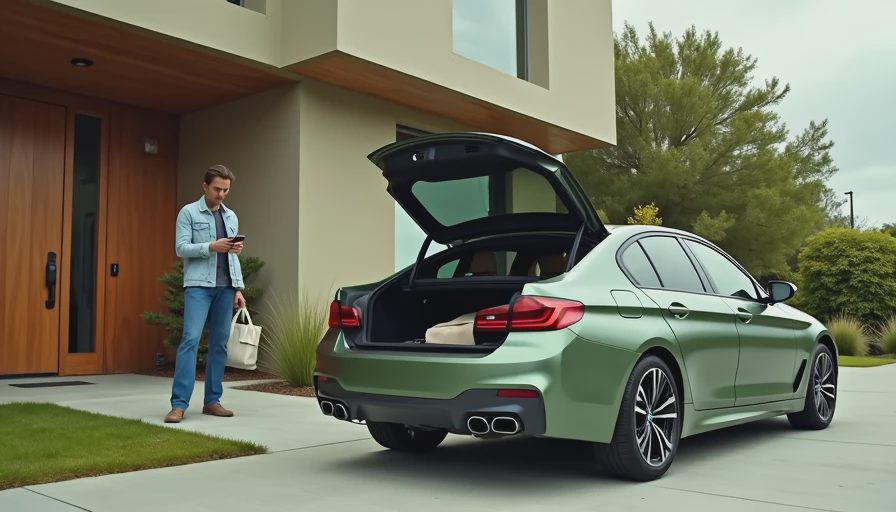
Depending on configuration and wheels, the i5 eDrive40 offers an EPA-estimated range of up to about 295 miles. The M60 generally gives up some range because of its second motor, larger output, and performance-oriented equipment. In practical terms, a driver covering 35 to 45 miles each weekday can handle normal commuting with home charging two or three times per week.
The bmw i5 car supports DC fast charging at rates up to approximately 205 kilowatts under favorable conditions. BMW says a compatible fast charger can add a substantial amount of range in around half an hour, though charging speed depends on battery temperature, station output, and the vehicle’s state of charge. At home, a 240-volt Level 2 charger is the sensible setup. Overnight charging is slower than filling a gasoline tank, but it is convenient because the car starts each morning ready to go.
The charging navigation system is more useful than many early electric-car interfaces. It can plan stops and account for battery needs, but public charging remains less predictable than visiting a gas station. Buyers who regularly drive long rural routes should examine their local charging network before signing a purchase agreement.
How the i5 drives
The bmw i5 car is a large sedan, and its curb weight is obvious when a corner tightens. Steering is accurate, body control is secure, and the chassis never feels careless, but the car does not dance through a canyon road like a lighter 3 Series. The M60 can disguise its mass with enormous acceleration, yet physics remains in the room.
That is not necessarily a criticism. The i5’s real talent is covering distance without tiring its occupants. The suspension absorbs expansion joints with a quiet, expensive thump, while the seats offer broad support and generous adjustment. Rear legroom is excellent, and the trunk provides useful space for luggage, groceries, or a couple of medium-size travel cases.
Braking is strong, with regenerative braking blending into the friction brakes more naturally than in many electric cars. One-pedal driving can be adjusted through the menus, although BMW makes the driver work a little too hard to find preferred settings. The bmw i5 car rewards a relaxed hand and a long view; it is a fast executive sedan first and a weekend canyon weapon second.

Cabin technology and comfort
The interior has the materials expected at this price: attractive trim, firm switchgear, excellent front seats, and convincing assembly quality. The curved display dominates the dashboard, combining the instrument panel and central infotainment screen. Graphics are sharp, and the system responds quickly, but the number of menus can distract from basic tasks such as adjusting climate settings or changing drive behavior.
BMW’s current voice controls and shortcut options help, but traditional physical controls would improve the experience. The bmw i5 car also offers advanced driver-assistance features, including adaptive cruise control and lane-centering functions on properly equipped versions. These systems are useful on long freeway drives, though they should be treated as assistance rather than autonomous driving.
The cabin’s quietness is a major advantage. Electric powertrains eliminate engine vibration, and the i5’s insulation makes conversations easy at highway speed. That serenity can make the car feel almost too detached for enthusiasts, especially when compared with a gasoline-powered M550i or a sharper, lighter sports sedan.
Price, alternatives, and ownership math
Pricing depends heavily on trim, options, incentives, and destination charges. A well-equipped i5 can move comfortably into the upper-$70,000 range, while an M60 can approach or exceed $90,000 before any tax credit or dealer adjustment. That places it against the Mercedes-Benz EQE, Tesla Model S, Lucid Air, and traditional gasoline sedans such as the Mercedes-Benz E-Class and BMW’s own 5 Series.
The bmw i5 car makes the strongest financial case for buyers who can charge at home and drive enough miles to benefit from lower electricity costs. Electricity is often cheaper than gasoline per mile, but insurance, tires, depreciation, and installation of a home charger still matter. The heavy curb weight can also accelerate tire wear, particularly with large wheels and performance driving.
Compared with a Tesla Model S, the i5 offers a more conventional luxury-car interior, familiar dealership support, and a calmer ride. Compared with the EQE, it feels more alert and driver-focused. The Lucid Air can offer impressive range and efficiency, but BMW’s established service network may be more reassuring for some households.
The Verdict: pros, cons, and whether you should actually buy one
The bmw i5 car earns praise for its quiet ride, instant performance, excellent seats, strong highway manners, and polished construction. Its weaknesses are just as clear: considerable weight, a busy infotainment system, expensive upper trims, and range that cannot match the best long-distance electric sedans.
The bottom line is straightforward. Choose the rear-drive eDrive40 if you want a refined electric commuter and highway car with enough pace for real-world driving. Choose the M60 only if its explosive acceleration matters more than efficiency and purchase price. If you cannot charge at home or regularly travel beyond reliable fast-charging corridors, a conventional 5 Series or hybrid competitor remains easier to live with.
My score for the bmw i5 car is 8 out of 10. It is not the most exciting BMW sedan ever built, but it may be one of the easiest luxury EVs to use every day. For buyers ready to make the electric switch without abandoning quiet comfort, recognizable controls, and proper road manners, this is a convincing answer.