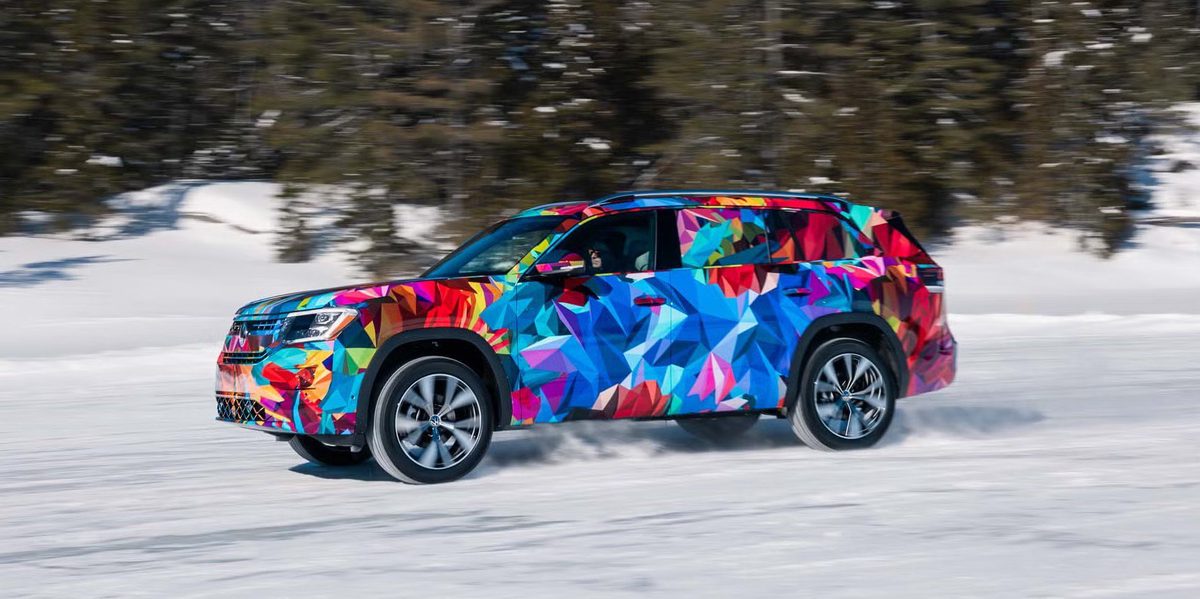
The Volkswagen Atlas moves into its second generation with the 2027 model year. VW's largest SUV hasn't been transformed visually, but the changes that have been made matter: a sharper exterior, a more refined interior, a stronger engine, and additional safety technology.
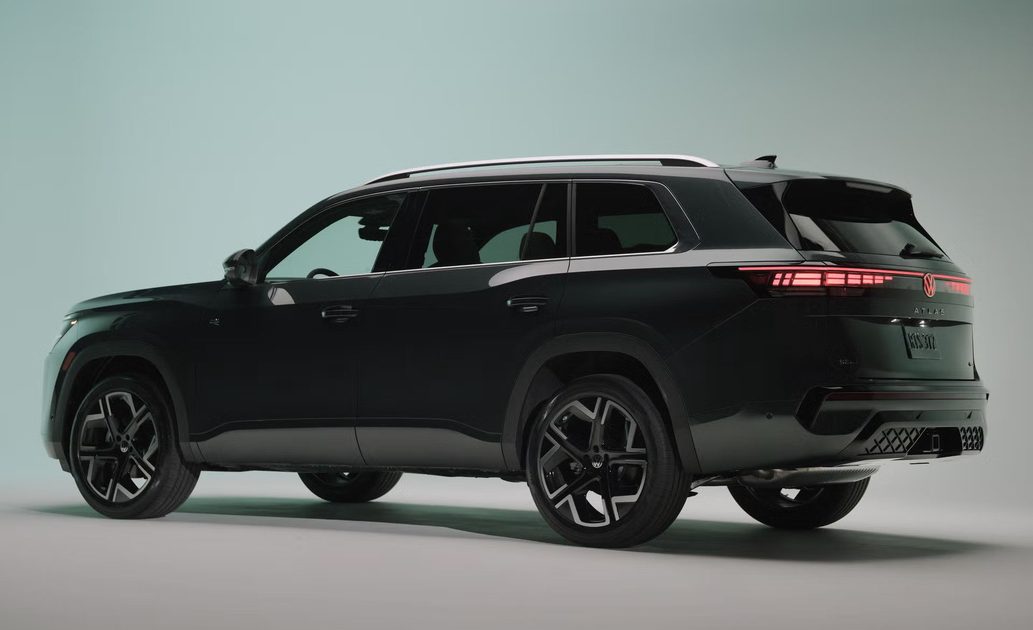
The Atlas continues on the MQB Evo platform — an evolved version of the same architecture used since the SUV's 2018 debut. The body grows roughly an inch longer, while width, height, and wheelbase remain the same. New body panels carry over the square-jawed face and boxy profile of the original, along with the same prominent fender flares.
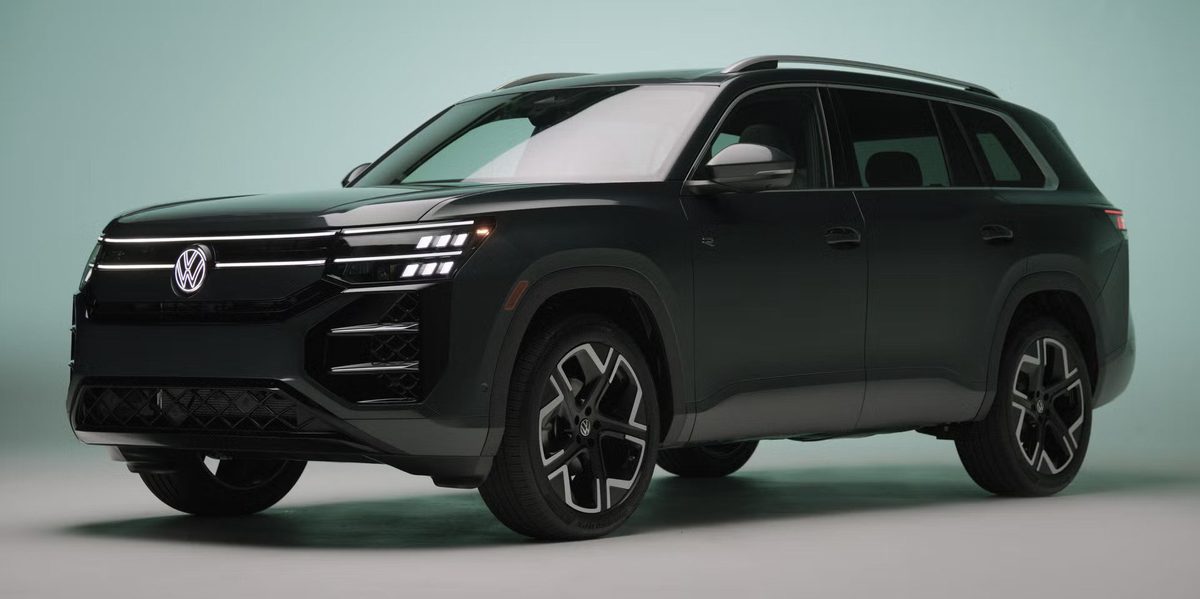
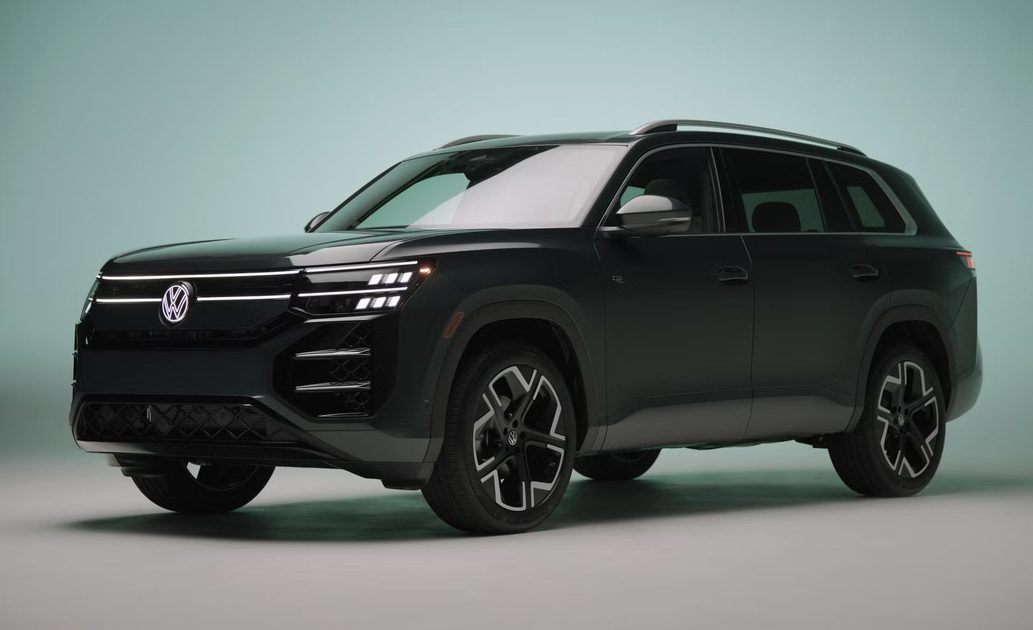
The front end gets dramatic new lighting treatment: twin LED strips in the headlamps extend horizontally across the grille, which features a body-color panel at its center. A lower light bar is broken by an illuminated VW roundel, and this lighting arrangement is standard on every trim above the base. As one VW representative put it, "Lighting is the new chrome."
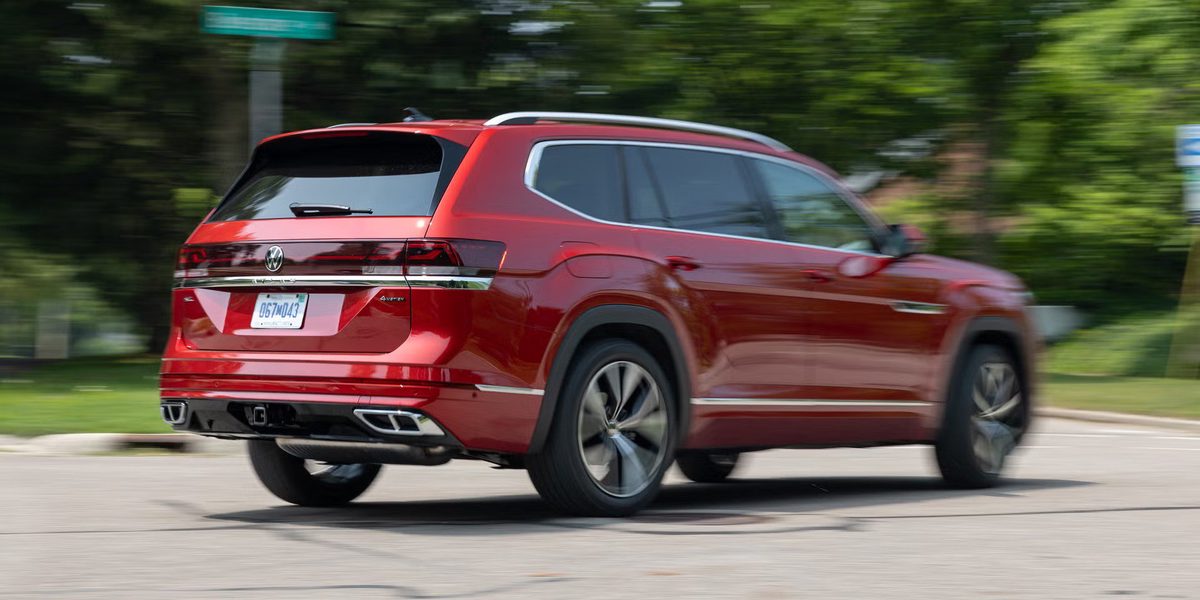
A wide, trapezoidal lower intake on the front bumper is framed by large vents below the headlights. A sharp feature line on the flanks rides higher than on the current model, and the side glass no longer features an upward kick toward the rear pillars. The rear adds a more prominent spoiler and a full-width taillight unit with LED squares that mirror the front light signature. Illuminated door handles are available on all four corners. New 20- and 21-inch alloy wheels are standard above the base trim, which wears 18-inch rollers. Three new exterior colors are offered: Blackberry, Sandstone, and Sacramento Green.
The engine is an updated EA888 turbocharged 2.0-liter four-cylinder, now producing 282 horsepower — 13 more than before — though torque dips from 273 pound-feet to 258 pound-feet. Volkswagen says fuel economy will improve, and the familiar eight-speed automatic continues. Front-wheel drive remains standard, all-wheel drive is optional, and towing capacity stays at 5000 pounds. A hybrid powertrain is on the roadmap for a mid-cycle refresh, but that's likely still several years away.
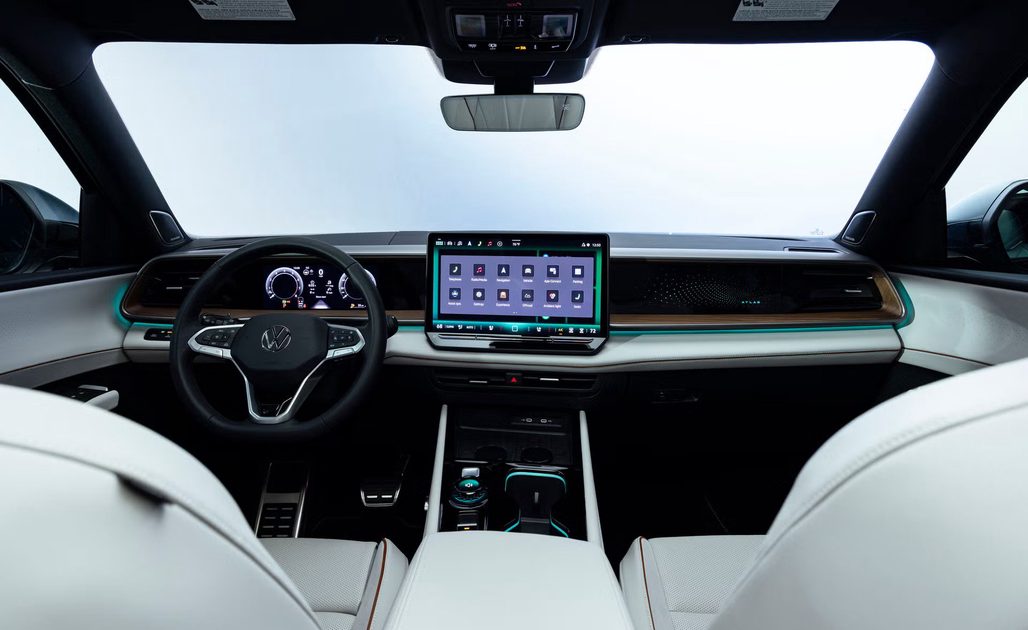
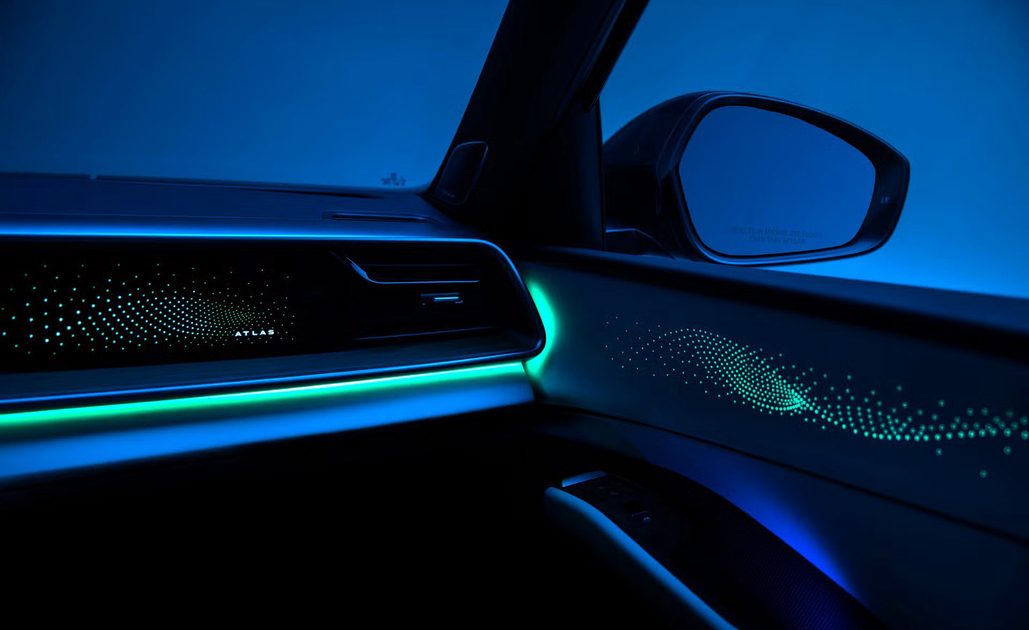
The interior has been substantially elevated. Wood trim runs across the dashboard in all trim levels. VW has committed heavily to ambient lighting: a glowing strip wraps around the dashboard, and the top two trims feature backlit spiral perforations in the door panels and a matching spiral-pattern display on the passenger side of the dash. Ten ambient light colors are available as standard, while the SEL and SEL Premium R-Line get 30 options. The lighting shifts blue or red when the temperature is adjusted, or pulses orange when hazards are activated.
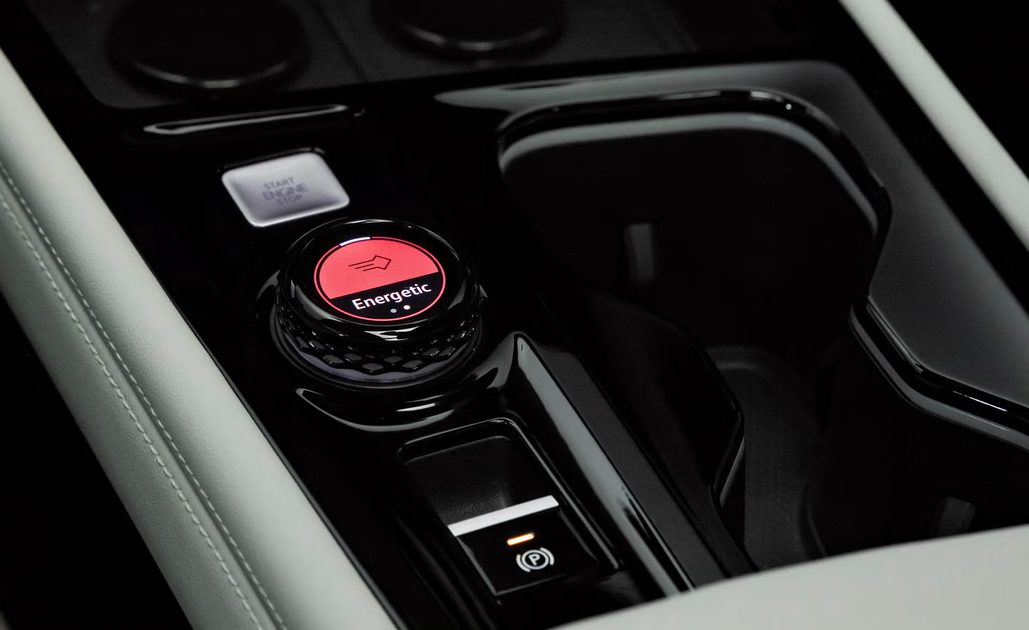
A new multi-function dial on the center console serves as the default volume control, but pressing the small integrated screen converts it into a drive mode selector. Swipe left and it toggles the "Atmospheres" feature, which blends lighting and audio settings. This control accompanies a 15-inch central touchscreen found on most trims — the base model makes do with a 12.9-inch unit — while a 10.3-inch digital gauge cluster is standard across the lineup.
The gear selector has been moved to the steering column, creating room in the console for two Qi2 magnetic wireless phone chargers that keep devices positioned and cool during charging. Leather upholstery options include Varenna leather on the SEL and nappa leather on the SEL Premium R-Line; the base model uses synthetic leatherette. Interior color choices are light gray, black/dark gray, and a new deep wine.
Standard equipment has also been expanded to include a power liftgate, rear window sunshades, an auto-dimming driver's mirror, and front and rear parking sensors. Dual cargo area lights activate when the liftgate opens, and the base audio system grows from six to nine speakers. The top trim can be fitted with a 14-speaker Harman/Kardon system.
B-pillar vents have been added to improve airflow to rear-seat occupants, and second-row seat ventilation is now available. The driver's seat comes standard with 12-way adjustment and four-way lumbar support, and upper trims can be specified with a massage function. Second-row captain's chairs and a panoramic sunroof remain available across most of the lineup.
Safety has been upgraded as well, with a new center front airbag and enhanced driver-assistance features. The hands-on Travel Assist system — which manages steering, braking, and acceleration via adaptive cruise and lane keeping at speeds up to 95 mph — can now execute driver-initiated lane changes. Emergency Assist can detect a potential medical situation and autonomously slow and steer the vehicle to the roadside, while Park Assist Plus debuts on the top trim.
The Atlas remains built in Chattanooga, Tennessee. Full pricing and final details will be released before the model goes on sale this fall. We anticipate a modest price increase over the 2026 model's $40,785 entry price.