From behind the wheel of the current Golf R, the first thing you notice is not the launch-control shove. It is the way the engine gathers itself between corners, delivering a dense wave of torque without making the car feel nervous. The 2026 Golf R engine details point to more of that familiar formula: a turbocharged four-cylinder, all-wheel drive, and enough electronic assistance to make a wet freeway ramp feel like a private test track.
Volkswagen has not reinvented the Golf R for 2026. That is both the attraction and the central criticism. The latest U.S.-market car uses a 2.0-liter turbocharged inline-four, paired with a seven-speed dual-clutch automatic transmission and VW’s 4Motion all-wheel-drive system. Output is expected to remain around 328 horsepower and 295 pound-feet of torque, figures that put the Golf R comfortably ahead of ordinary hot hatches while keeping it below the exotic price bracket.
2026 Golf R engine details at a glance
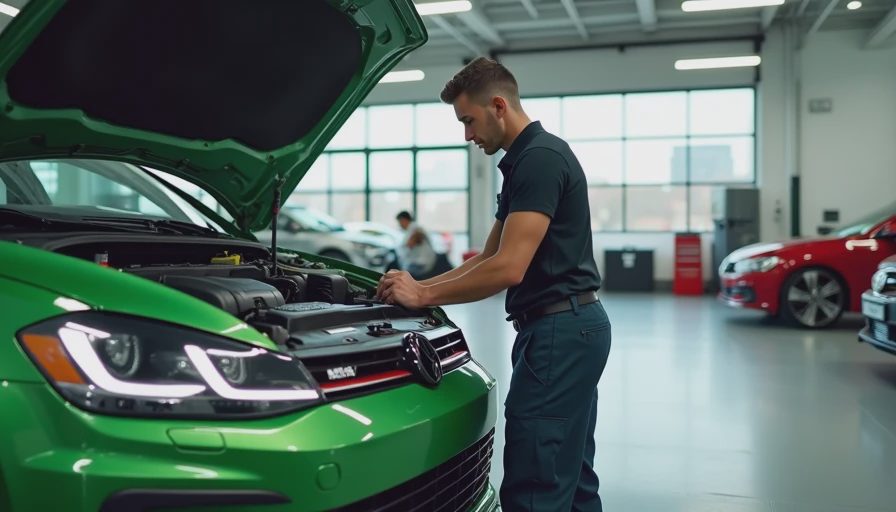
The engine is Volkswagen’s familiar EA888-family 2.0-liter turbo four. It uses direct fuel injection, a single turbocharger, and modern variable-valve technology to produce strong low- and midrange response. In the latest version, peak output arrives high enough in the rev range to reward a driver who stays engaged, but the broad torque curve means you do not need to chase the tachometer in normal traffic.
The key numbers tell most of the story. Expect approximately 328 horsepower and 295 pound-feet of torque, with the torque arriving early enough to make the Golf R feel substantially quicker than its modest displacement suggests. Volkswagen has quoted a 0-to-60-mph time in the low four-second range when launch control and suitable conditions are used. Independent testing of closely related Golf R models has generally landed in that neighborhood, although tires, pavement, weather, and testing equipment can move the result by several tenths.
The engine is not a high-strung specialty motor. It is a mass-produced Volkswagen Group powerplant shared in related forms across several products. That is good news for parts availability and service familiarity, though it also means the Golf R does not have the mechanical theater of a five-cylinder Audi RS3 or the naturally aspirated urgency of older performance cars.

Turbo response, sound, and everyday behavior
The best part of the 2026 Golf R engine details is how usable the power should be. A well-calibrated turbo engine can make a compact car feel relaxed at 35 mph and forceful at 75 mph, and the Golf R has traditionally done exactly that. Passing a slower vehicle takes a firm squeeze rather than a long planning exercise. The seven-speed DSG then delivers a fast downshift with little drama.
There is a trade-off. Turbocharged four-cylinders rarely sound as rich as larger engines, and the Golf R leans on intake noise, exhaust valves, and cabin enhancement to create more occasion. In its sportier modes, the car can sound busy without being especially beautiful. The benefit is a quieter, more mature character in Comfort mode, where the engine settles into highway work without constantly advertising its performance credentials.
Fuel economy should remain respectable rather than remarkable. Depending on final certification and driving conditions, buyers should expect EPA figures in the general high-20s on the highway and low-20s in combined use. Aggressive driving, winter fuel, short trips, and repeated launches can pull real-world consumption into the high teens. A 2.0-liter engine saves fuel when driven gently, but 328 horsepower invites experimentation.
Drivetrain hardware and traction
Power reaches all four wheels through 4Motion all-wheel drive. The system is not simply a full-time mechanical arrangement sending an equal share to each axle. Electronic controls continuously manage torque distribution and work with the vehicle’s drive modes, allowing the Golf R to emphasize stability, corner exit traction, or a more playful rear-biased character in its sportiest settings.
That hardware matters because front-wheel drive alone would struggle to use this much torque on imperfect pavement. In dry conditions, the Golf R can launch with remarkable consistency. On rain-soaked Southern California asphalt or a cold Midwestern road, all-wheel drive makes the car less theatrical but more effective. You feel the advantage most when accelerating out of a second-gear corner: the car claws forward instead of waiting for the front tires to regain composure.
The DSG is quick, but it removes some involvement. Volkswagen no longer offers the same manual-transmission experience in the current U.S. Golf R generation, so buyers who insist on three pedals will need to look at alternatives such as the Honda Civic Type R or Subaru WRX. The DSG is the faster choice, but speed and intimacy are not always the same thing.
How the engine compares with rivals
The 2026 Golf R engine details make the car an unusual middle ground. The Honda Civic Type R uses a 2.0-liter turbo four and sends power through the front wheels, with a superb manual gearbox and an unusually communicative chassis. It feels more focused and more transparent, but it is less discreet and less useful in poor weather.
The Subaru WRX offers standard all-wheel drive and a lower entry price, yet its 2.4-liter turbo boxer engine does not deliver the same polished surge or transmission refinement when equipped with its automatic option. The Toyota GR Corolla is lighter, louder, and more mischievous, but its three-cylinder engine and tighter cabin give it a different personality.
On paper, the Golf R is the all-weather hot hatch. In practice, it is the winner for a buyer who wants one car to handle commuting, winter trips, highway miles, and occasional track days without requiring a second vehicle. Its engine is strong enough for serious fun, but its manners remain civilized.
Reliability, maintenance, and buying advice
A turbocharged performance engine rewards disciplined maintenance. Use the specified oil, observe the service intervals, and do not ignore cooling-system warnings or unusual turbo noises. The DSG also requires scheduled fluid service, and that expense should be included in any ownership budget. A reasonable planning figure is several hundred dollars for routine services, with larger bills possible when dual-clutch or all-wheel-drive components need attention outside warranty coverage.
The 2026 Golf R engine details should not be read as a promise that every example will deliver identical fuel economy or acceleration. Tire choice, altitude, temperature, fuel quality, and software calibration all affect results. A buyer should also price insurance, premium fuel, performance tires, and brake wear rather than looking only at the window sticker.
Before signing, ask for the complete warranty terms, confirm the service history on any used or demonstrator car, and inspect the tires for uneven wear. A test drive should include a cold start, stop-and-go traffic, a highway merge, and several moderate corners. Listen for drivetrain clunks and judge whether the DSG’s low-speed behavior suits your habits.
The Verdict: pros, cons, and whether you should actually buy one
Pros. The 2026 Golf R engine details describe a compact performance car with serious acceleration, broad torque, effective all-wheel drive, and enough refinement for daily use. The 2.0-liter turbo is powerful without requiring a large engine bay or exotic service routine. The Golf R also gives an enthusiast a rare combination of hatchback practicality and sub-five-second pace.
Cons. The soundtrack is manufactured more than memorable, fuel economy drops quickly when driven hard, and the DSG makes the car less involving than a manual rival. Expected pricing will also place it well above an ordinary Golf or mainstream compact hatchback. Electronic complexity brings capability, but it can make long-term repair costs less predictable.
Bottom line. The 2026 Golf R engine details suggest evolution rather than revolution, and that is enough. This remains the sophisticated choice for drivers who want one compact car to do nearly everything quickly. Choose it over a Civic Type R for all-weather traction and daily polish; choose the Honda for steering feel and manual involvement. The Golf R earns a measured 8 out of 10.