From behind the wheel, the first thing you notice is how quietly the Audi A7 gathers speed. The engine is barely audible, the transmission shifts without drama, and the car seems to glide over Southern California pavement with the composure of something much more expensive. The audi a7 is not a sports sedan wearing a fancy suit, however. It is a fast, comfortable liftback with a few compromises hiding beneath its polished surface.
A restrained design that has aged well
The audi a7 remains one of the better-looking luxury cars in its class. Its roofline sweeps backward like a coupe, yet the rear hatch opens to reveal useful cargo space. The proportions are long and low, and the broad grille gives the front end enough authority without resorting to cartoonish aggression. Audi's design is often criticized for changing slowly, but that restraint helps the A7 avoid the visual clutter found on some newer rivals.
Inside, the cabin is similarly controlled. Materials are generally excellent, with supportive leather seats, convincing metallic trim, and a dashboard that feels carefully assembled. The available dual-screen infotainment setup looks modern, though the lower display can require more attention than a simple physical control. Rear-seat room is adequate for adults, but the sloping roof does not create a palatial back row. Think business-class coupe, not family limousine.
The hatch is the practical masterstroke. The audi a7 offers substantially easier loading than a conventional trunk sedan, making room for luggage, groceries, or a couple of medium-sized bags of golf equipment. The power liftgate is standard on many configurations, and the rear seats fold when larger objects need to come aboard.
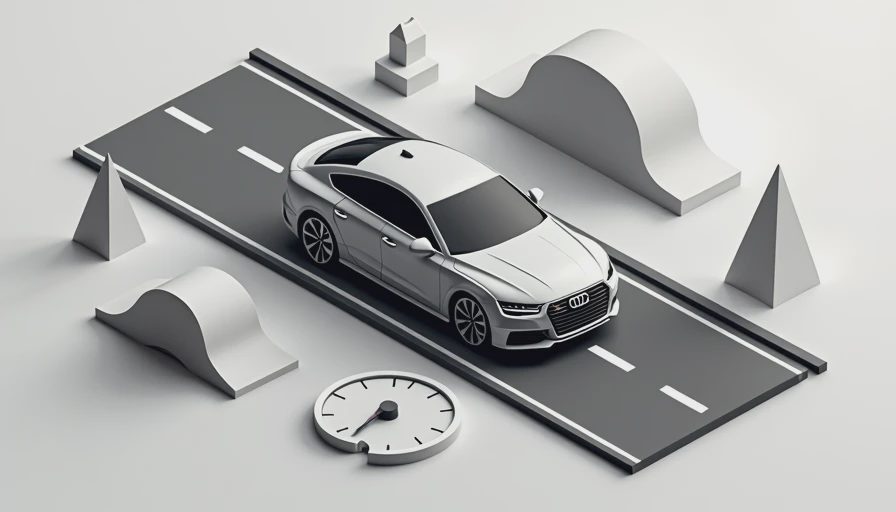
Performance: quick, smooth, and rarely theatrical
Most recent U.S.-market versions use a turbocharged 3.0-liter V6 making 335 horsepower and 369 pound-feet of torque. Power reaches all four wheels through Audi's quattro all-wheel-drive system and a seven-speed dual-clutch automatic. Audi quotes a 0-to-60-mph time of about 5.2 seconds, which is quick enough to make freeway merges effortless without turning every drive into an event.
The audi a7 is strongest when driven quickly but smoothly. There is immediate thrust in Comfort mode, while Dynamic mode sharpens the throttle and adds weight to the steering. The car feels stable at 80 mph, with the kind of long-legged confidence that makes a Las Vegas run seem shorter than it is. Steering accuracy is good, although the wheel does not communicate much about the front tires.
That last point matters. The A7 is capable on a winding road, but it is not an entertaining sports sedan in the classic sense. A BMW 5 Series gives you more feedback, and a Porsche Panamera feels more eager to rotate through a corner. The audi a7 prefers clean, fast progress. It rewards precision rather than bravado, which is exactly what many luxury buyers want.
Ride quality, brakes, and everyday manners
With its standard adaptive air suspension on some trims and available chassis upgrades, the audi a7 can be remarkably calm over broken pavement. In its most comfortable setting, it absorbs expansion joints and rough city streets without floating. Larger wheels and performance-oriented tires reduce that cushion, so buyers who value isolation should resist the temptation to choose the most aggressive wheel package.
Braking performance is reassuring. The pedal has a firm initial response, and the car tracks straight under hard stops. Independent testing for versions of this generation has generally placed 60-to-0-mph braking in the low-to-mid 100-foot range, a respectable result for a luxury hatchback weighing more than two tons. The brakes can produce some road noise over coarse pavement, but that is a minor complaint.
Fuel economy is reasonable rather than remarkable. EPA ratings for recent V6 models are roughly 22 mpg city and 29 mpg highway, with combined mileage in the mid-20s. My realistic expectation for mixed driving is around 24 mpg, depending on traffic, wheel size, and how often the driver uses the throttle. Premium fuel is recommended, so running costs are higher than those of a four-cylinder sedan.

Technology and ownership costs
The audi a7 comes with a substantial technology package, including digital instrumentation, smartphone integration, navigation availability, and a broad range of driver-assistance features. The surround-view camera and adaptive cruise control are especially useful in a car with a long nose and expensive bodywork. Some desirable equipment is tied to option packages, so a lightly equipped example can feel less special than its price suggests.
Maintenance is another part of the calculation. Oil service, brakes, tires, and scheduled inspections cost more than they do on a Honda Accord. A single set of premium performance tires can easily approach $1,200, while brake work at a luxury dealer can run well into four figures. Independent European specialists can reduce labor costs, but buyers should still budget carefully.
Insurance premiums are also influenced by the A7's repair value, turbocharged powertrain, safety equipment, and theft risk in the buyer's location. A clean driving record and higher deductible can help, but a driver should obtain an actual quote before committing to the purchase. Comparing several insurers could reveal a meaningful difference in annual cost, particularly when comprehensive and collision coverage are included.
For used buyers, service history matters more than a bargain price. Look for documented oil changes, evidence that recalls were completed, quiet suspension operation, and smooth electronic functions. A pre-purchase inspection from an Audi specialist is money well spent. A $250 inspection can expose tires, leaks, warning lights, or suspension issues before they become a $3,000 surprise.
Audi A7 versus its rivals
The closest alternatives include the BMW 5 Series, Mercedes-Benz CLS, and Porsche Panamera. The BMW is the sharper driver's car, with more communicative steering and a broader range of powertrains. The Mercedes emphasizes visual drama and a softer, more lounge-like cabin. The Porsche costs more but offers the strongest connection between driver and machine.
The audi a7 occupies a sensible middle ground. It is more distinctive and practical than a traditional sedan, calmer than the Porsche, and less showy than the Mercedes. Its liftback shape gives it an advantage over the BMW when carrying bulky luggage. In exchange, the A7 does not deliver quite the same steering feel or rear-seat openness as some competitors.
Choosing between them comes down to priorities. If daily comfort, understated design, all-weather traction, and cargo flexibility matter most, the A7 is an unusually complete package. If the commute includes frequent canyon roads and the driver wants every corner to feel like an occasion, the BMW or Porsche deserves a closer look.
The Verdict: pros, cons, and whether you should actually buy one
The audi a7 earns praise for its graceful design, quiet ride, strong V6, useful hatchback cargo area, and confident highway manners. It feels expensive in the right ways, and its cabin remains a pleasant place to spend several hours. The car also avoids the harshness that often accompanies sporty luxury models.
Its weaknesses are just as clear. The rear seat is tighter than the exterior suggests, touchscreen controls can distract, option pricing climbs quickly, and maintenance is not inexpensive. The steering is accurate but emotionally distant, so enthusiastic drivers should not confuse competence with character.
Bottom line: buy the audi a7 if you want one luxury car to handle commuting, road trips, bad weather, and occasional fast back-road work without looking ordinary. Shop carefully, budget for premium maintenance, and favor a well-documented example over a heavily optioned mystery car. My score is 8 out of 10. It is not the most exciting choice in the class, but it may be the most quietly satisfying one.