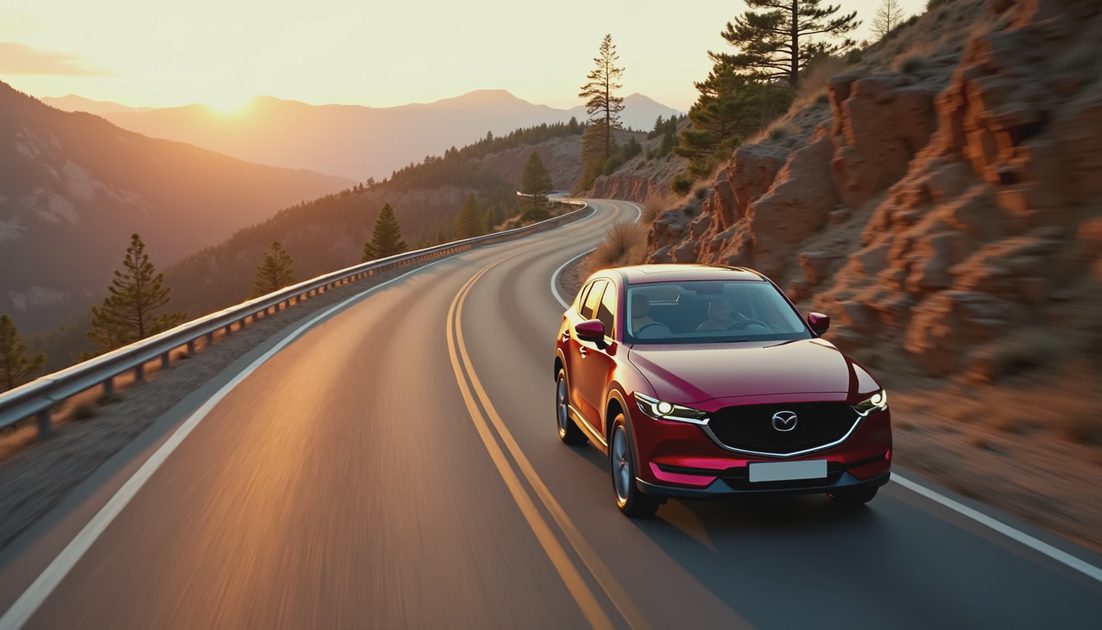
2026 Mazda CX-5 Turns Up the Heat on Its Own CX-50 Rivalry
The first thing you notice from the driver’s seat isn’t a new screen or a flashy trim piece—it’s the sense that Mazda has pushed the CX-5 closer to the CX-50 than ever, to the point where you can almost hear the product planners arguing in the next room.
Car and Driver’s latest instrumented testing makes the headline plain: the redesigned 2026 CX-5 doesn’t just evolve, it escalates an in-house sibling rivalry. That’s a tricky game for any brand. Bring the “mainstream” model too close to the “more rugged, more premium” alternative, and suddenly your lineup looks less like a ladder and more like a Venn diagram.
Mazda, of course, has a history of making these overlaps feel intentional. Sometimes it’s even charming—like two jazz musicians riffing on the same theme. But it can also leave shoppers wondering what, exactly, they’re paying for besides a different badge on the tailgate.
The CX-5’s Mission: Close the Gap, Not Just the Sale
The key detail from the source is that the redesigned CX-5 “moves even closer to the CX-50.” That’s not a small statement, because the CX-50 has effectively served as Mazda’s answer to the current market’s appetite for tougher-looking crossovers with a slightly more outdoorsy vibe. When your newer, more image-driven sibling exists, the safe move is to keep the older nameplate comfortably in its lane.
Instead, Mazda appears to be tightening the spacing between the two. If you’re a buyer, that can be good news: more of the CX-50’s presence and polish, filtered through a model that’s historically been Mazda’s bread-and-butter compact SUV.
But here’s the critique: when a manufacturer compresses the differences between adjacent products, the decision process doesn’t get easier—it gets more sensitive. One test drive can hinge on a detail as mundane as seat comfort, sightlines, or how the steering loads up mid-corner. And if the vehicles are too similar, you’re left choosing based on aesthetics, incentives, or whichever one happens to be on the lot in the color you want.
That’s not inherently bad. It’s just a reminder that lineup strategy can either guide a customer—or make them do extra homework.
Why This Matters in the Real World
Compact crossovers are the industry’s volume core, and the CX-5 has long been one of Mazda’s most important models. So when Car and Driver flags a redesign and calls out how it’s positioning relative to the CX-50, it’s a signal that Mazda is making a deliberate play: keep the CX-5 relevant not by reinventing its identity, but by borrowing more of the qualities buyers have been responding to elsewhere in the showroom.
There’s praise due in that restraint. Some brands panic-redesign vehicles into something unrecognizable, chasing trends with the subtlety of a leaf blower. Mazda’s approach—at least as suggested by the source—is more about sharpening the argument for the CX-5 rather than turning it into a different car entirely.
Still, there’s a potential downside. If the CX-5 now sits closer to the CX-50 in character and capability, Mazda has to be careful about internal cannibalization. The CX-50 needs a clear reason to exist beyond styling and marketing posture. Meanwhile, the CX-5 must continue to justify itself as the model you’d recommend to a friend who wants a well-rounded crossover and doesn’t want to overthink it.
That’s where instrumented testing and objective data become more than bragging rights. When two vehicles are close on paper and price, performance numbers, efficiency results, and real-world usability details become the tie-breakers that matter.
The Bigger Picture: Mazda’s “Two Compact SUVs” Bet
The broader story here isn’t just that a CX-5 redesign happened—it’s that Mazda is trying to sustain two compact-ish SUVs that potentially appeal to the same buyer. That’s a bold bet in a market where differentiation often comes down to packaging, powertrain choices, and brand hierarchy.
Car and Driver framing the CX-5 as escalating a sibling rivalry underscores that Mazda isn’t treating this as a simple “old model/new model” sequence. It’s more like parallel evolution: two vehicles orbiting the same mission, each adjusting to market gravity.
As an enthusiast, I like the idea. Competition inside a brand can produce genuinely better vehicles—engineers and chassis teams don’t want their car to be the “lesser” drive. As a consumer advocate, I also know what happens when the differences are too subtle: buyers get stuck in analysis paralysis, or they end up paying for the one with the better story rather than the better fit.
If Mazda executes this cleanly, the upside is choice without compromise. If it doesn’t, the lineup risks redundancy.
Either way, the 2026 CX-5 isn’t trying to be merely “still here.” It’s trying to be the more compelling answer—while its own sibling is standing right next to it.
┌──────────────────────── Verdict ────────────────────────┐
Pros:
- A full redesign signals Mazda is keeping the CX-5 competitive, not coasting.
- Moving closer to the CX-50 could bring more premium feel and presence to the CX-5.
Cons:
- If CX-5 and CX-50 get too similar, choosing between them becomes needlessly confusing.
- Lineup overlap can undercut the CX-50’s purpose unless Mazda keeps clear separation.
Bottom Line:
The redesigned 2026 Mazda CX-5 is being positioned closer than ever to the CX-50—good for shoppers who want more CX-50 flavor, but it puts pressure on Mazda to justify two near-neighbors in the same space.
└─────────────────────────────────────────────────────────┘