From behind the wheel, the first thing you notice is the noise. Not the stereo, because the carbon buckets leave no room for anything other than your spine. The 360 Challenge Stradale F1 lets out a metallic rattle at idle, then a full-throated V8 scream as the revs climb past 6,500. It is the kind of sound that makes you forget the car is nearly two decades old. And that, right out of the gate, is what separates the Challenge Stradale from every other 360 on the used market.
The Story Behind the 360 Challenge Stradale
The Ferrari 360 Challenge Stradale was built in limited numbers from 2003 to 2005, a street-legal evolution of the car Ferrari sold in its one-make Challenge series. Thinner body panels, lightweight glass, a bit more power, and a launcher of a gearbox. Only 1,288 examples left the factory, and most went to customers who understood exactly what they were buying: a turnkey racer that could be parked in a Beverly Hills garage. Today, prices have climbed, but the appeal is unchanged.
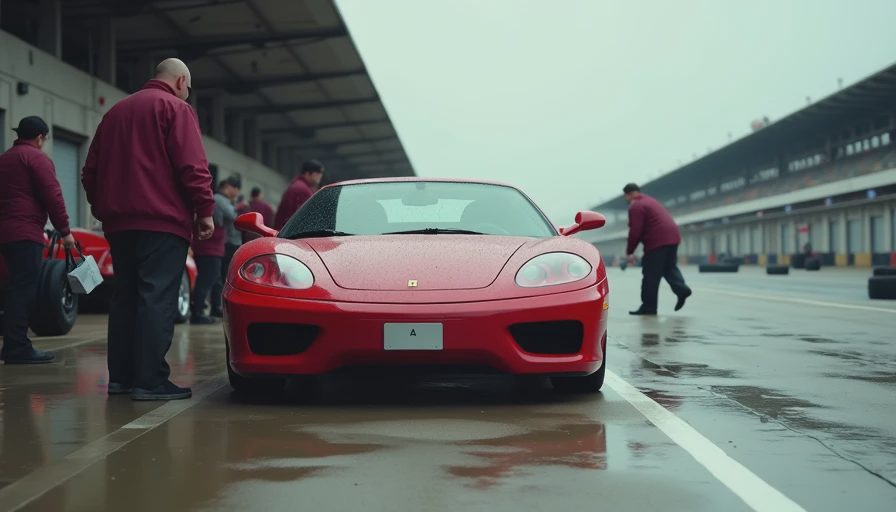
Under the rear deck sits the same 3.6-liter V8 used in the Modena, but with revised intake and exhaust tuning that lifts output to 425 horsepower. That doesn't sound like much in a world where the base Mustang makes more. But in a car that weighs roughly 2,800 pounds, it's enough to reach 60 mph in the mid-4-second range. Honestly, the numbers are less important than the delivery. The throttle responds like it's wired directly to your foot, and the engine pulls without pause to the 8,500-rpm redline. The exhaust note, with its crackles on overrun, is a soundtrack that modern turbos simply can't reproduce.
Behind the Wheel: The V8 and the F1 Gearbox
The real party trick of the 360 Challenge Stradale F1 is the gearbox. It's a six-speed automated manual, often called the F1 transmission, and it was a revelation in 2003. Swap shifts are brutal and immediate, the kind you feel in your chest rather than just hear. Ferrari claimed a 150-millisecond shift time, which felt impossibly quick at the time. But it comes with compromises. At low speed, the clutch can be abrupt, and parking lot maneuvers require patience. If you want the purist experience, the gated six-speed manual from the standard Modena is sweeter on the street.
On the road, the Challenge Stradale is a study in focus. The suspension is firm, the steering is knife-edged at speed, and the carbon-ceramic brakes — rare for the era — clamp down with little drama. This is not a car you want for a cross-country road trip with luggage. The cabin is stripped, the seats are fixed-back carbon buckets, and there is no dead pedal to brace your left foot. You drive this Ferrari the way you'd drive a race car: hands at nine and three, eyes up, mind on the next corner. On a winding canyon road like Mulholland, the car feels alive in a way that few modern supercars can match, despite the stiff ride and constant steering feedback.
Track Duty: Where the Challenge Stradale Feels at Home
Take it to a track like Willow Springs, and the 360 Challenge Stradale F1 rewards you with balance that feels honest. Understeer is minimal, and when the tail steps out, it does so progressively. The 19-inch tires of the period grip hard when warm, and the lightweight body rotates with surprising eagerness. The tradeoff is a ride that constantly reminds you of the road's texture. Over freeway joints, the structure shudders in a way modern Ferraris have filtered out entirely. But on a smooth circuit, that stiffness becomes precision, and you start to understand why so many track-day enthusiasts chase this exact car.

Interior and Day-to-Day Life
Climbing into the Challenge Stradale requires the agility of a gymnast. The carbon door sills are wide, and the seats sit low. Once you're in, the driving position is spot on, with the wheel close and the pedals perfectly aligned. Visibility is surprisingly good forward, though the thick A-pillars and tall door mirrors create blind spots that make city driving a test of patience.
The interior is a love letter to the 2000s. Yellow engine-start button, a small navigation screen, and lots of bare carbon fiber. There's no glovebox to speak of, and the space behind the seats is enough for a weekend bag if you're being creative. Air conditioning works, but the car generates a lot of heat through the center tunnel, so you'll know you're in a mid-engined machine. On a long drive, you'll feel every bump, and the cabin noise at freeway speeds is loud enough to make phone calls difficult. This is not an every-day Ferrari. But as a weekend toy, it's pure theater.
Ownership Costs and Market Reality
Ownership is not for the faint of heart. Parts are expensive, and the F1 pump and clutch are known wear items that can run four figures when they need attention. Values have risen, with clean examples listing north of $150,000, but that's still well short of a 458 or 488. You're paying for scarcity and honest track breeding. If you plan to use it as intended, the 360 Challenge Stradale F1 is arguably one of the best driver's cars of the decade. If you expect a grand tourer, you'll be disappointed.
The Bottom Line
The verdict is clear: the 360 Challenge Stradale F1 is a rewarding but demanding companion. The wins are razor-sharp handling, a brilliant engine, and investment potential. The losses are the harsh ride, the finicky F1 gearbox in traffic, and running costs that can bite. The bottom line is that buyers who love hard-edged driving will find it worth every compromise, while those looking for a comfortable classic should look elsewhere. Score: 8.2 out of 10. That's a car I'd happily own, and one I'd never recommend to someone who values refinement first.