The Best Garage Heater for Your Automotive Workshop: A Complete Buyer's Guide
From behind the wheel of a cold car on a winter morning, the first thing you notice is the bite of the steering wheel through your gloves. You can’t really diagnose a misfire or swap out a control arm when your fingers are numb and the concrete’s seeping cold through your boots. That’s why a proper garage heater isn’t a luxury—it’s a tool. Whether you are restoring a classic, wrenching on a daily driver, or just storing a weekend toy, the right garage heater makes the difference between a productive Saturday and a frozen, frustrating one.
I have spent the last twenty years testing cars in every climate this country offers, and I have burned through more portable heaters than I care to count. This guide covers the types, the sizing, the fuel choices, and the safety considerations you need to pick the garage heater that works for your space and your budget.
Types of Garage Heaters: Which One Fits Your Shop?
Walk into any big-box hardware store or browse online, and you’ll find three main categories: forced-air, infrared, and radiant tube heaters. Each has its own character.
Forced-air heaters—often called “salamander” heaters—blow hot air directly into the space. They are loud, they kick up dust (think grinding dust from your bench grinder), and they heat the air quickly, but they also cool quickly when the unit cycles off. These are best for workshops where you need fast temperature rise and don’t mind the noise.
Infrared heaters work like the sun. They warm objects and surfaces, not the air. That means you feel warm sooner, and the floor, tools, and car stay warm longer. They are silent and don’t circulate dust, making them ideal for a clean restoration shop. The trade-off is they need a clear line of sight and don’t heat the whole space evenly if you have partitions.
Radiant tube heaters mount on the ceiling and direct heat downward via a reflector. They are common in commercial shops because they heat a large area efficiently, especially with natural gas or propane. Installation is more involved, but the operating cost can be lower over time.
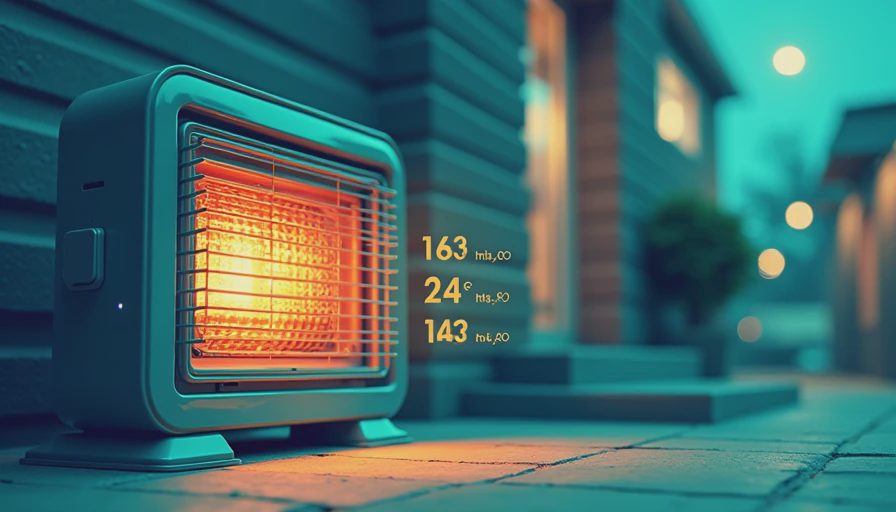
BTUs, Watts, and Square Footage: Matching Heat to Space
Size matters. An undersized garage heater runs constantly, costing you money and never getting truly comfortable. An oversized one cycles on and off too often, wasting fuel and creating temperature swings.
A simple rule of thumb for an insulated garage in a moderate climate (say, zone 4–5): you want roughly 8 to 10 BTUs per square foot. For a typical two-car garage—around 500 square feet—that’s 4,000 to 5,000 BTUs minimum. But if your ceiling is high (12 feet or more), add 20 percent. If the garage is uninsulated or you live in a northern state, double that number.
Electric heaters are rated in watts. One watt equals roughly 3.4 BTUs. A 1,500-watt heater on a standard 120-volt outlet gives you about 5,100 BTUs, which works for a small, well-insulated one-car space, but for a full shop you’ll need a 240-volt circuit and a heater in the 5,000–10,000-watt range.
Fuel Options: Electric, Propane, Natural Gas
Electric garage heaters are the easiest to install—plug in or hardwire, and you are done. They are 100 percent efficient at converting electricity to heat, but electricity rates vary. In parts of the Northeast or California, electric resistance heat can be expensive to run. If your shop is already wired for a welder or compressor, adding a 240-volt heater is straightforward.
Propane and natural gas heaters are cheaper per BTU in most of the country. Natural gas is the lowest operating cost, but you need a gas line and proper venting. Propane gives you portability if you use a tank, but you have to refill. Both require combustion air and exhaust venting—either through the wall or roof. Never run an unvented gas heater in a garage; the carbon monoxide risk is real.

Installation and Safety Considerations
Where you place the garage heater matters. Keep it at least three feet from flammable materials like paint cans, solvent, and cardboard boxes. Forced-air units should be aimed away from gas cans and any fuel source. Infrared units get hot—check the clearance to the ceiling and any overhead shelving.
If you are installing a gas heater, check local codes. Many jurisdictions require a permit and inspection. The heater must be listed for garage use (look for “UL” or “CSA” certification). Also, if you have a gas water heater in the garage, make sure each appliance has enough combustion air—adding a second gas appliance can starve the first one.
Electric heaters are simpler, but never use an extension cord rated for a lower amperage than the heater. A 1,500-watt heater draws about 12.5 amps; a standard 16-gauge cord will overheat. Use 12-gauge or heavier, or better yet, hardwire it.
Cost Analysis: Initial Outlay vs. Operating Cost
A 5,000-watt electric garage heater costs about $200–$400. Running it for 8 hours a day for a month at $0.12/kWh adds up to roughly $150. Over a five-month heating season, that’s $750.
A propane forced-air heater of similar output runs about $300–$500. Propane at $2.00/gallon and a heater that consumes 1 gallon per hour comes to $16 per 8-hour day. That’s $2,400 over five months if you use it daily. However, many people don’t run the heater full-time; they use it only when they are in the shop.
Natural gas heaters (installed) cost $800–$1,500, but the fuel cost is often half that of electric. Over several years, the natural gas unit pays for itself. The break-even point depends on your climate and usage.
The Verdict: Which Garage Heater Should You Buy?
Pros and cons help you decide.
For a small, well-insulated garage where you only work a few hours a week, an electric infrared heater is quiet, clean, and easy to install. It won't raise your utility bill as much as you think if you use it sparingly.
For a larger shop where you spend whole days, a natural gas radiant tube heater is the long-term winner. Higher upfront cost, lower operating cost, and even heat that doesn't blow junk into your engine bay.
If you need portability or you rent, a propane forced-air heater gets the job done. Just vent the garage slightly (crack a window) and don't leave it running unattended.
Bottom line: Buy a garage heater sized for your square footage, choose a fuel source that makes sense for your local rates, and install it safely. Your projects—and your fingers—will thank you.