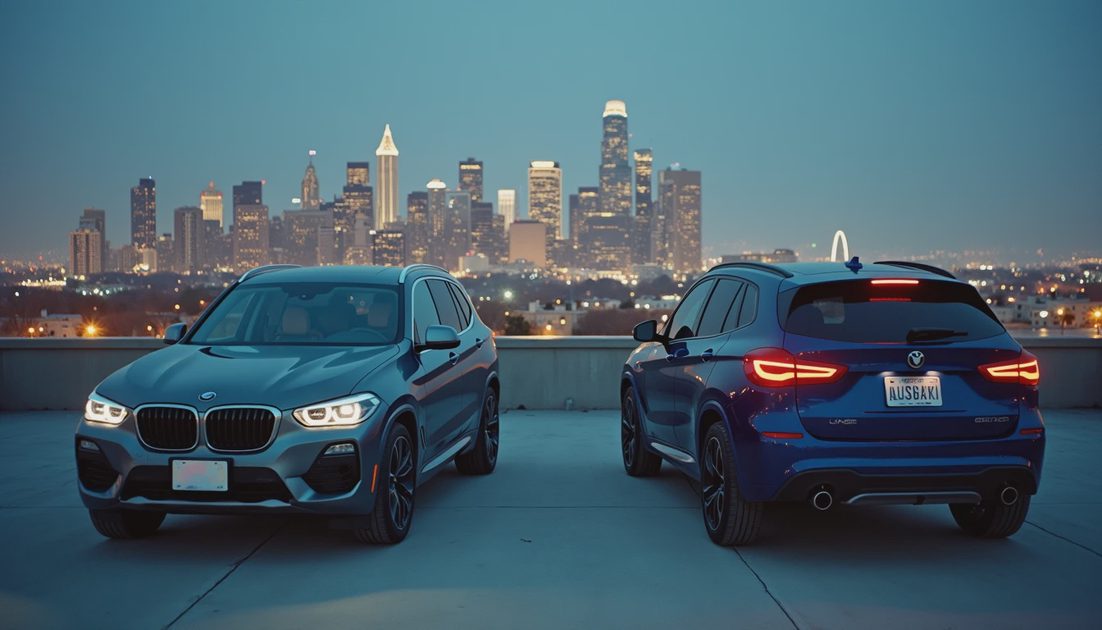
Car and Driver’s Comparison Tests Remind You Why “Best” Is Always a Fight
At 70 mph in the middle lane, the truth shows up in small doses: a steering wheel that won’t settle, a transmission that hunts, a seat that feels supportive until it doesn’t. That’s why a real comparison test matters. It’s not about reading a spec sheet in isolation—it’s about finding out which car still feels right when the road, the traffic, and your expectations stop being polite.
Car and Driver’s comparison-test hub is basically a front door to that old-school kind of accountability: cars, trucks, and SUVs lined up against their direct rivals, “careful evaluation and scoring,” then a ranking from worst to best with a winner at the end. The site’s list is sprawling—everything from modern matchups like “Tested: 2026 Ford Explorer ST vs. Mazda CX-90 Turbo S” and “Tested: 2026 Honda Pilot vs. Nissan Pathfinder” to deep-cut archive brawls like “1993 Nissan 300ZX vs. Chevy Corvette vs. Porsche 968” and “GT Thunderdome: 1982 De Lorean vs. the World.”
If you’re an enthusiast, that’s catnip. If you’re shopping, it’s even better, because comparison tests do something single-car reviews can’t: they reveal what’s merely good and what’s good enough to beat the other good stuff.
What’s striking about this page isn’t one headline result—it’s the breadth of the battlegrounds. There are “$30,000 Small Cars,” “Compact Hybrid SUVs,” “Full-Size-SUV,” and a “Porsche Macan Comparison Test: Gas vs. Electric.” The point isn’t that every category is equally thrilling; it’s that almost every category now has a rivalry worth adjudicating. And in 2026, that rivalry increasingly includes powertrains as much as badges.
Why comparison tests still hit harder than standalone reviews
A single vehicle review can tell you whether a car is competent. A comparison test tells you whether it’s compelling. That’s the difference between “I could live with this” and “I’d pick this.”
Car and Driver frames it simply: pit vehicles against their rivals, evaluate, score, rank, name a winner. It sounds procedural—and it is—but the magic is what falls out of the process. When you drive competitors back-to-back, you stop forgiving flaws you might excuse on a one-car loan. You notice the weird throttle tip-in because you just drove the one that nailed it. You catch the wind noise because the other SUV was quieter on the same stretch of freeway.
It also forces priorities. The best comparison tests don’t just crown the “fastest” or the “nicest.” They surface tradeoffs in a way shoppers actually feel: the practical one that’s dull, the fun one that’s compromised, the premium one that’s almost worth it, and the underdog that wins because it’s cohesive.
That cohesion is where winners tend to live. Not necessarily in the highest horsepower or the biggest screen—though those things can help—but in the vehicle that does fewer things wrong, more things consistently, and almost nothing that makes you sigh on day three.
The most interesting signal on the page: new cars, old rivalries, and powertrain pivots
A quick scan of the list tells you the industry’s current shape. Yes, the classics still get their place: there are comparisons involving Aston Martin, BMW, Ferrari, and throwbacks like “1978 BMW 630CSi, Jag XJ-S, Mercedes 450SLC Comparo.” Those aren’t just nostalgia pieces; they’re reminders that “best” has always been contextual, and that some arguments never die.
But the modern tests show where the market is actively reshuffling.
You’ve got three-row family bruisers going head-to-head (“Tested: 2026 Honda Pilot vs. Nissan Pathfinder”), and performance-leaning family haulers (“Test: 2026 Ford Explorer ST vs. Mazda CX-90 Turbo S”). That’s a very 2026 kind of tension: buyers want room and calm, but they also want the thing to feel awake when the road opens up.
Then there’s electrification showing up not as a niche, but as a direct fork in the road. “Porsche Macan Comparison Test: Gas vs. Electric” is the tell. That’s not a compliance car story. That’s a mainstream premium model asking a hard question: do you want the familiar flavor, or the new recipe—and which is actually better to live with?
The list also suggests that comparison testing is evolving with the market’s messy middle. There are entries like “Compared: Tesla Model Y RWD vs. Hyundai Ioniq 5,” and “Tested: 2025 Chevrolet Blazer SS vs. Kia EV6 GT.” Those aren’t academic matchups. They’re the kinds of cross-shop decisions people actually make: brand loyalty vs. charging reality, performance promises vs. everyday refinement, design drama vs. usability.
How to use this page if you’re actually shopping
The best way to read a comparison test isn’t to skip to the winner. Start by asking: what’s my non-negotiable? Then look at categories that match your life, not your fantasies.
If you’re hunting for a daily driver with minimal regret, you’re going to care about the same fundamentals every time: control weights, ride compliance, cabin noise, and the way the powertrain behaves in normal traffic. Comparison tests tend to expose those areas because rivals make weaknesses obvious.
If you’re chasing something emotional—say, the type of story implied by “Ford v Ferdinand: Mustang GTD vs. 911 GT3 RS”—you’re still shopping, just with different priorities. The trick is admitting which compromises you’ll tolerate. A head-to-head test tends to clarify whether a car’s personality is endearing or exhausting.
And for anyone lost in today’s powertrain maze, the gas-versus-electric comparisons matter because they frame EV life as an ownership proposition, not a virtue signal. For a car that runs on electrons, the bar isn’t just quickness; it’s whether the whole experience is seamless enough to make you forget what’s under the floor.
Car and Driver’s page doesn’t hand you one narrative. It hands you a library of arguments, each with a referee. That’s valuable, because car buying isn’t about finding the “best car.” It’s about finding the best car for you—while acknowledging the runner-up might be better at the one thing you didn’t realize you cared about until you drove it.
At its best, a comparison test doesn’t flatter your assumptions. It corrects them.