Flat tires are the automotive equivalent of a surprise pop quiz. You can't schedule them, and there's always the chance you'll need to know how to change a tire at the worst possible moment. I've spent more than two decades testing cars, and I've seen countless drivers struggle with a flat because they never practiced the basics. The good news is that changing a tire isn't hard if you follow the right sequence. This guide walks you through every step, from finding a safe spot to torquing the last lug nut, so you can get back on the road with confidence.
What You'll Need
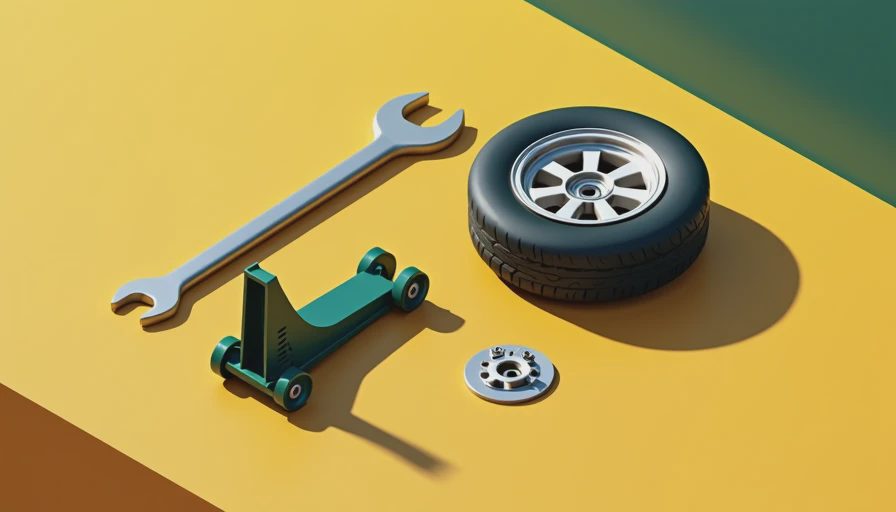
Before you need it, check what's in your trunk. Most cars come with a jack and a temporary spare. Some newer models skip the spare entirely and use a sealant kit. That's a temporary repair, not a real tire change. For this guide, I'm assuming you have a spare and a jack. The factory jack works, but the wrench it comes with is often too short to break loose lug nuts that were over-tightened. A four-way tire iron or a 1/2-inch breaker bar gives you the leverage you need. Also pack a pair of gloves, a flashlight, warning triangles, and a wheel chock or a large rock. A reflective vest is smart if you're near traffic.
Step 1: Find a Safe, Level Spot
Pull off the road as far as possible and switch on your hazard lights. Look for a flat, firm surface. Concrete or asphalt is far better than grass or gravel, which can let the jack sink. Once you're stopped, set the parking brake and shift into Park, or into first gear if you drive a manual. Place a wheel chock or a heavy rock against the wheel that's staying on the ground. That prevents the car from rolling forward or backward. It's a step many people ignore, but I've watched a car rock off a jack because the parking brake alone wasn't enough.
Step 2: Loosen the Lug Nuts Before Jacking Up
This is the step most people get backward. Loosen the lug nuts while the car is still on the ground, or the wheel will spin when you try to turn the wrench. Use your tire iron to rotate each nut counterclockwise a half-turn. If they're tight, put your weight on the iron or stand on it. A shot of penetrating oil like WD-40 helps if a nut is seized. Don't take the nuts off completely; just break them free. Leave them holding the wheel in place. You'll finish removing them once the car is in the air.
Step 3: Jack Up and Remove the Flat
Check your owner's manual to find the reinforced jacking points along the rocker panel. Place the jack under one of those points, and if the ground is soft, set the jack on a flat piece of wood. Pump until the tire is two inches off the ground. Now remove the lug nuts by hand and set them aside in a clean spot. Pull the flat straight toward you. If it's stuck to the hub, give the tire a sharp kick with the edge of your foot. That usually breaks it loose without damaging anything.
Step 4: Install the Spare and Tighten
Before mounting the spare, check its air pressure. A temporary spare typically needs 60 psi, and many lose air while sitting in the trunk. If it's low, use a portable compressor or inflate it at the nearest station before you drive. Line up the spare's holes with the wheel studs and slide it into place. Thread the lug nuts on by hand, then tighten them in a star pattern. Lower the car until the tire touches the ground, then give each nut a final turn. If you have a torque wrench, set it to the spec in your manual, usually 80 to 100 ft-lb.
After the Change: Speed and Distance Limits
A temporary spare is not a normal tire. It's designed to get you to a repair shop, not to your cousin's house three states away. Most manufacturers limit speed to 50 mph and distance to 50 or 70 miles. The exact limit is printed on the sidewall.

Drive gently, avoid hard corners, and don't put a temporary spare on the drive axle of a four-wheel-drive vehicle if you can avoid it. Once you know how to change a tire, you also need to know when to slow down and head straight to a shop. This is the part of the job that most people forget.
When to Call a Pro Instead
There are times when the smartest move is to call for help. If you're parked on a busy freeway with no safe shoulder, or if it's dark and raining, don't risk changing a tire. Call roadside assistance or a tow truck. The same goes if the spare is missing, already flat, or if the lug nuts are rusted so badly that your wrench won't budge them. Large SUVs and trucks on a scissor jack are especially dangerous. A professional tow is cheap compared to a catastrophic injury.
The Bottom Line
Knowing how to change a tire is a basic life skill that every driver should have. It takes about 15 minutes, no special tools beyond the ones in your trunk, and it can save you hours of waiting on a shoulder. But it's not something to attempt for the first time in a storm. Practice on a sunny day in your driveway. Locate your jack, confirm your spare has air, and walk through the steps once. When a flat catches you off guard, you'll be glad you did.