The Koenigsegg Jesko price has been a topic of debate since the car's debut in 2019. At a base of roughly $3 million, it sits at the very top of a hypercar market where a used example with a few thousand miles can command even more. I've spent two decades testing cars at this rarified level, and the Jesko is one of the few machines that genuinely changes the conversation. Here's what the money gets you, what it doesn't, and whether the asking price is worth the experience.
What the Koenigsegg Jesko Price Actually Buys
The Koenigsegg Jesko price starts at roughly $3 million, and that base number includes more engineering than almost anything else in the segment. Under the rear clamshell sits a 5.0-liter twin-turbo V8 that makes 1,280 horsepower on 93-octane pump gas and 1,600 on E85. The engine is bolted to Koenigsegg's nine-speed Light Speed Transmission, a single-clutch automated manual that shifts faster than just about any dual-clutch setup. The carbon-fiber monocoque keeps curb weight low, and the active aero produces serious downforce at speed. Koenigsegg limits production to 125 cars, so part of what you're paying for is scarcity.
There is no $3 million car without compromises, and the Jesko has a few. The ride is firm, the cabin is tight, and the lack of sound deadening means every stone hitting the wheel wells is an event. But that stripped-back approach is the point. This is a track weapon first, street car second, and any evaluation of the Koenigsegg Jesko price has to start with that understanding.
How the Koenigsegg Jesko Price Compares to Rivals
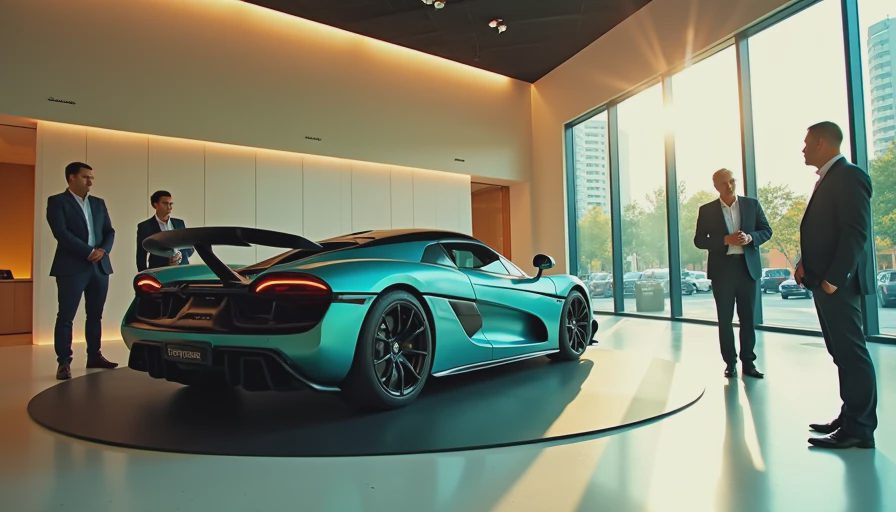
If you're measuring the Koenigsegg Jesko price against its peers, the closest match is the Bugatti Chiron, which also starts in the low $3-million range. The Chiron offers more luxury and a smoother ride, but it doesn't match the Jesko's outright downforce or its focus on lap times. Pagani's Huayra Roadster is priced higher when configured, and it's a rolling sculpture, but it doesn't have the same engineering extremity. McLaren's Speedtail is a three-seat hyper-GT with a $2.3 million asking price, yet its hybrid powertrain can't match the V8's raw output. The Hennessey Venom F5 starts around $2.7 million and targets top speed, but it's built in limited numbers with a different philosophy. What the Jesko does better than all of them is combine that V8 character with a transmission that changes gear ratios instantly and aero that actually holds the car to the ground. That engineering density is why the price holds up on the used market.
What the Options List Does to the Koenigsegg Jesko Price
Another important part of the Koenigsegg Jesko price is what it isn't: a complete price. Most buyers tick at least a few boxes on the options sheet. Custom paint can run into six figures if you ask for the same multi-layer finish the factory uses on its show cars. Exposed carbon fiber on the body panels adds tens of thousands more. The active rear wing, which is standard on the Absolut and optional on the standard car, adds anti-dive and anti-squat functions that are worth it if you plan to track the car. There's also a $100,000-plus carbon wheel package that cuts unsprung weight. Insurance is an annual expense that changes with your driving history, but for a car at this value, expect a premium in the five-figure range each year. Maintenance is equally serious: a single engine service at a Koenigsegg facility runs anywhere from $15,000 to $30,000, and tires are a multi-thousand-dollar consumable. By the time you're driving a properly configured Jesko, you're well past the advertised base price.
Is the Koenigsegg Jesko Worth the Money?
When it comes to the value call, there are two ways to answer. For an owner buying one to keep, the car delivers an experience no other vehicle can provide. The shift speed, the engine noise, and the way the aero pins you to the road are legitimate sensations. For a collector buying one as an investment, the answer depends on whether Koenigsegg continues to appreciate. Many of the 125 units are already in collections worldwide, and resale values have stayed above the original sticker in recent years. But the running costs are real, and the car is not practical. If you want a hypercar for weekend drives and track days, the Jesko is one of the few that rewards the money. If you want something you can live with daily, the price is not the main problem; the ergonomics and ride quality are.
The list of things I'd change is short but real. The infotainment screen washes out in direct sun. The door opening is awkward for taller drivers, and the high sills make entry and exit a chore. But those are minor gripes against a machine that redefines what a street-legal car can do on a racing circuit. The pros include the powertrain, the aerodynamics, and the transmission. The cons are the price, the cost of ownership, and the lack of luxury convenience. The bottom line is that the price is justified only if you're the kind of buyer who values capability over comfort. For everyone else, it's a beautiful piece of machinery to admire, not to own.