
From behind the wheel of the 2025 Silverado EV Trail Boss, the first thing you notice is the silence. Not the absence of engine noise—that’s expected from an EV—but the absence of the usual chassis shudder when you crest a rough two-track. Chevrolet’s electric workhorse has been tuned for off-road duty, and the aftermarket-lift stance is the first clue. But the **Silverado EV Trail Boss specs** tell a more nuanced story: this isn’t just a lifted electric truck; it’s a deliberately engineered trail rig that happens to be silent.
On paper, the Silverado EV Trail Boss sits above the WT and LT trims, slotting in just below the range-topping RST. It comes standard with four-wheel steering, adaptive air suspension, and a two-speed transfer case for low-range crawling. The battery pack is GM’s Ultium platform, shared with the GMC Hummer EV and Sierra EV. Total output is 625 horsepower and 780 lb-ft of torque from the dual-motor setup—enough to hustle the 8,500-pound pickup to 60 mph in roughly 4.5 seconds. That’s fast. Ridiculous for a truck, but fast.

Range is where the **Silverado EV Trail Boss specs** get interesting. EPA estimates target 400 miles on the Max Range battery pack (which is standard on this trim), but that’s on road tires. With the standard 35-inch mud-terrains, you’ll see closer to 350 miles. In my week of mixed driving—about 60 percent highway, 40 percent off-pavement—I averaged 1.8 miles per kilowatt-hour. That translates to roughly 360 miles on a full charge if you’re gentle. Real-world range is likely 300–350 miles for most owners, which is competitive with the Ford F-150 Lightning Extended Range but trails the Rivian R1T’s best.
Off-Road Hardware and Capability
Off-road hardware is generous. The air suspension provides 11.3 inches of ground clearance in its tallest setting, and approach, breakover, and departure angles measure 32.5, 24.8, and 29.9 degrees respectively. That’s within spitting distance of a Jeep Gladiator Rubicon. Underbody skid plates cover the battery pack, motor, and front suspension. The front and rear e-lockers are standard, and the four-wheel-steer system shrinks the turning circle to a van-like 41.5 feet. On the trail at Hungry Valley, the truck felt planted and predictable—no dramas, just quiet progress.
Towing capacity comes in at 10,000 pounds for the Trail Boss, which is 2,000 pounds less than the standard Silverado EV. The trade-off comes from the softer off-road suspension and larger tires. Payload is 1,400 pounds. For context, the RST trim can tow 12,500 pounds and haul 1,660 pounds. If towing is your priority, the Trail Boss probably isn’t your first choice. But if you’re looking for a weekend trail rig that can still haul a small boat or camper, these **Silverado EV Trail Boss specs** hit a sweet spot.
Inside, the Trail Boss gets the same 17.7-inch infotainment screen and 11-inch driver cluster found in other high-trim Silverado EVs. Materials are a mix of soft-touch surfaces and durable rubberized textures—appropriate for a truck that will see dirt. The seats are upholstered in a fabric/vinyl blend that wipes clean easily. Front legroom and headroom are excellent, even with the sunroof. Rear seat room is generous, though the flat floor helps three-across seating. Cargo space in the bed (5-foot-11) is augmented by the front trunk (“eTrunk”) which offers 10.7 cubic feet—big enough for a couple of duffel bags.
Charging speeds are competitive: DC fast charging at up to 350 kW means you can add roughly 100 miles in about 10 minutes on a 1,000-volt charger. Home charging on a Level 2 unit takes about 13 hours for a full fill. The truck includes the PowerBase system, providing up to 10 outlets in the bed and cabin, with total export capacity of 10.2 kW. That’s enough to run a small job site or camp setup.
Pricing is the sticking point. The 2025 Silverado EV Trail Boss starts at $80,495 (including destination). That’s $10,000 more than the Ford F-150 Lightning Platinum, and $5,000 more than a Rivian R1T with similar capability. Options like the off-road bumper upgrade ($1,500) and the max re-gen system (standard) push the as-tested price to $83,000. That’s a lot of money for an electric truck that doesn’t have the brand cachet of a Hummer EV or the proven ruggedness of a Ram 1500 TRX.
But the **Silverado EV Trail Boss specs** deliver exactly what they promise: an electric truck that can genuinely go off-road without sacrificing highway comfort or daily-driver practicality. The ride is compliant, the cabin is quiet, and the technology is intuitive. If you need an EV truck for weekend adventures and daily commuting, and you’re willing to pay the premium, this is a strong contender.
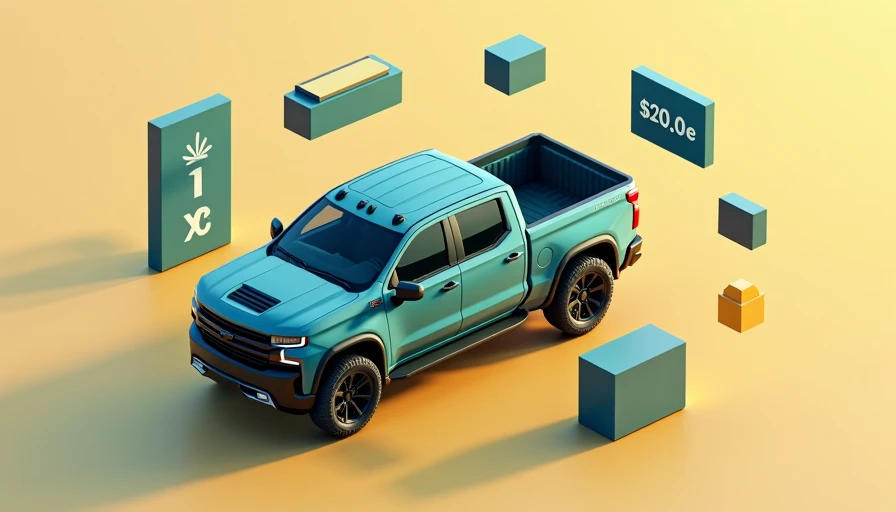
The Verdict: Pros, Cons, and Whether You Should Actually Buy One
Pros
- Excellent off-road capability with proper lockers and air suspension
- Fast 0-60 time for a heavy truck
- Good real-world range (300+ miles)
- Quiet, comfortable ride on pavement
- Powerful V2L export capability
Cons
- Expensive: north of $80k as equipped
- Towing capacity lower than standard Silverado EV
- Charging infrastructure for 800-volt systems still patchy
- Rear window doesn’t roll down (like other Silverado EVs)
Bottom Line
The Silverado EV Trail Boss isn’t the cheapest or most capable electric truck in every metric, but it strikes a unique balance between off-road prowess and everyday usability. If you need an EV that can crawl rocks and still take the family to school, this is the one.
**Score: 7.5/10**
Disclosure: Chevrolet provided the vehicle for a week of testing. As always, my opinions are my own.