From the driver's seat, the first thing you notice is how much a quiet drivetrain changes the off-road conversation. The jeep recon is meant to be Jeep's electric answer to buyers who want trail credibility without giving up daily civility, and that makes it a more important vehicle than the usual showroom curiosity. I have not put production miles on one yet, so this is a preview, not a road test, but the mission is clear enough: keep the square-jawed attitude, keep the useful body shape, and make the EV bits feel like an advantage instead of a lecture. I care less about peak horsepower at this stage than steering, visibility, brake feel, and the sort of cabin that does not punish a weekday commute. If Jeep gets the range, charging, and weight balance right, this could be the brand's best shot at turning its reputation into something modern.
What Jeep is trying to do
The jeep recon matters because Jeep cannot treat electrification as a badge exercise. Buyers in this segment will compare it with the Ford Mustang Mach-E, Hyundai Ioniq 5, and the Wrangler 4xe, which means the real job is not to win on paper with a giant battery or a flashy screen. It is to deliver upright seating, short overhangs, and easy visibility, the things that make a Jeep feel useful before the trail gets difficult. If the production version keeps removable body bits and serious trail hardware, fine. If not, it still needs to look and feel honest. The marketing can be loud later. First the hardware has to make sense.
The other challenge is loyalty. Jeep buyers are not a gullible crowd. They know what a real trail package looks like, and they know when a crossover is wearing hiking boots. That puts real pressure on the engineers. The shape, the glass area, the wheel placement, and the stance all have to serve function, not just the Instagram angle. The jeep recon has to earn trust from people who might otherwise stay with a Wrangler 4xe, wait for a used example, or shop something else entirely.
Design and packaging
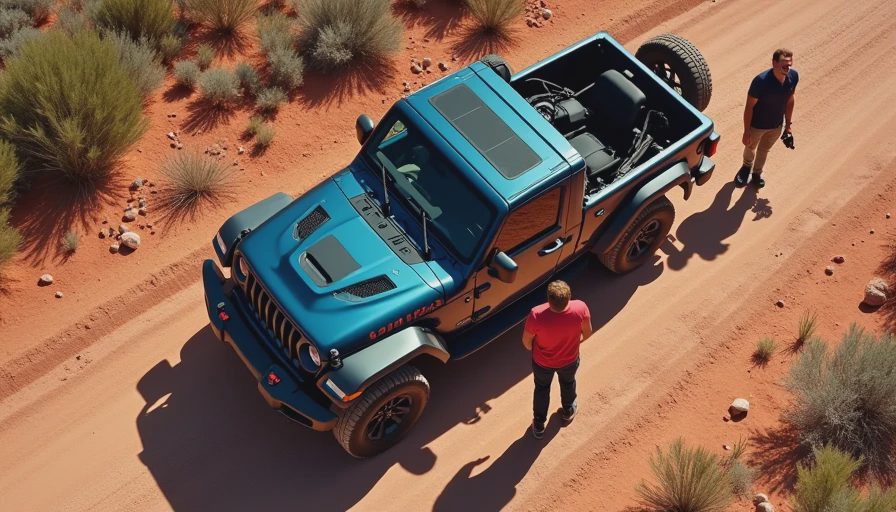
Styling will do some heavy lifting here, because electric vehicles need an identity that survives more than one showroom visit. The model should lean on Jeep's boxier language without becoming cosplay Wrangler. The important part is packaging: a square cabin gives better shoulder room, easier child-seat access, and a cargo bay that does not pinch the way some sleek crossovers do. Battery placement matters too. A well-placed pack should drop the floor enough to help stability without turning the rear seat into a knees-up compromise. This is where many EVs get lost. They look adventurous, then make the driver sit high, the passenger sit low, and the cargo floor rise like a platform shoe.
If the jeep recon gets the details right, the badge can still mean something practical: big door openings, durable materials, and controls you can use with gloves on. The difference between clever and annoying is often a few millimeters of trim. That is the sort of thing old-school buyers notice immediately, because it determines whether the vehicle feels engineered or merely styled. A boxy roofline also helps taller adults, and it keeps the rear glass useful instead of decorative. That is not romantic, but it is exactly the sort of thing that separates a vehicle you admire from one you actually own.
How it should drive
The jeep recon also has to make electric torque feel natural instead of theatrical. In town, that should mean smooth low-speed response, easy one-pedal driving if Jeep offers it, and enough punch to merge without wringing the motor's neck. Off pavement, electric drive can be a gift because it gives precise throttle control and instant torque at the exact moment a wheel needs it. The catch is weight. Batteries make everything heavier, and weight shows up in braking, tire wear, steering effort, and even the way the suspension settles over a sharp edge long before it shows up on a spec sheet. That is why chassis tuning will matter more here than a brochure full of promises.
Brake pedal calibration will be part of the same story. Too many EVs get the transition wrong, with a pedal that feels synthetic at first bite and nervous at the bottom of the travel. Jeep cannot afford that here. The steering should also stay clean and readable, with enough weight to feel stable on the highway and enough accuracy to place the vehicle on a rocky line without guesswork. If the jeep recon feels numb, the whole idea weakens. If it feels deliberate, buyers will forgive a lot.
Range and charging are the other half of the story. Buyers are not asking for miracle numbers; they are asking for a day-trip radius that does not feel fragile and a charging curve that fits real travel, not just a test loop. If Jeep wants this truck to live beyond the enthusiast crowd, it needs to make a long freeway run to Palm Springs or Big Bear without turning the driver into a planner. That is not exotic. It is the price of admission.
Cabin and daily use
A good interior will be the difference between curiosity and repeat business. The jeep recon should offer the upright seating and generous glass area buyers expect, but it also needs storage that works in the real world: phone shelf, deep cupholders, a place for sunglasses, and rear-seat access that does not require acrobatics. On a long commute, the vehicle will be judged as much by noise levels and seat comfort as by styling. If Jeep can keep wind noise down, tune the seats for support instead of flash, and use materials that can handle boots, dogs, and wet jackets, the cabin will feel right. If it leans too hard into gimmicks, the image fades fast.
That is where this Jeep can separate itself from softer electric crossovers. A buyer who spends weekends on dirt roads or at a trailhead does not want a precious interior that scratches if you look at it sideways. They want something that can be washed out, wiped down, and lived in. The best Jeep cabins have always understood that use case, even when the plastics are not fancy. Utility is a style choice too, and it usually ages better than gloss black. Even the charging cable needs a home that makes sense, because nothing kills daily goodwill faster than clutter.
Price, rivals, and what to watch
Price will likely decide the whole argument. If Jeep lands this in the mid-$50,000s, it can tempt buyers who want a premium-feeling electric SUV without jumping all the way to luxury-brand money. Push it into the low-$70,000s and the comparison set gets tougher, because shoppers start measuring standard equipment, charging speed, and warranty coverage more harshly. The Ford Mustang Mach-E, Hyundai Ioniq 5, Kia EV6, and Wrangler 4xe all live in a world where value matters as much as personality. The hardware has to justify the badge, not the other way around.
Dealers will matter too. A strong product can be undercut quickly if the launch turns into a markup game, and that is true across the industry, not just here. What to watch next is simple: final range, curb weight, trail hardware, and whether Jeep keeps the design honest when production realities start shaving the edges. Those are not small details. They are the details that decide whether the vehicle becomes a headline or a habit. For a brand built on image, habit is the harder thing to earn and the more valuable one to keep.
The Verdict
Pros are obvious if Jeep follows through: strong identity, practical packaging, and the kind of off-road credibility competitors cannot fake overnight. Cons are just as obvious: weight, price, and the risk that an electric drivetrain dulls the character that made the nameplate interesting in the first place. Bottom line, this is a vehicle worth waiting for, not hyping blindly. If the production version delivers real range and keeps the cabin useful, it could be the rare EV that earns loyalty from buyers who usually roll their eyes at EV marketing. Score: 7/10 on promise, with the final grade depending on the numbers Jeep actually publishes.