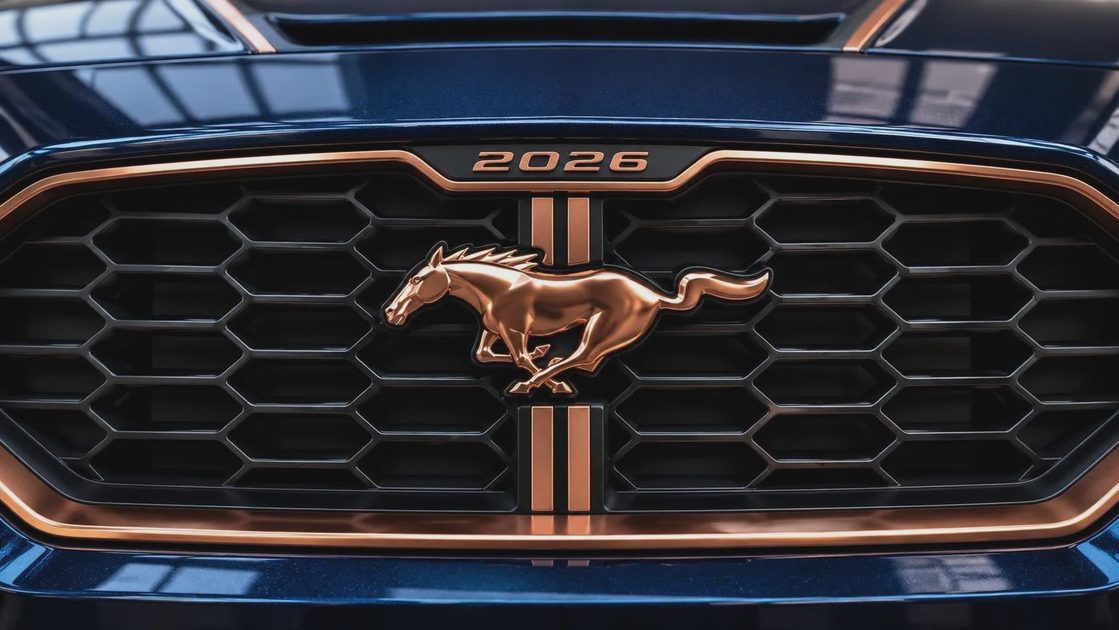
From behind the wheel, the first thing you notice is not the horsepower. It is the sense of occasion: a long hood ahead, a low seating position, and a throttle that still feels connected to something mechanical. The 2026 Ford Mustang arrives in a market crowded with quick electric cars and polished sport sedans, yet it continues to make a case for noise, shifting, and rear-wheel-drive balance.
This is a preview rather than a full instrumented road test. Ford has not made every final specification, price, or package detail public, so I will not pretend to have a verified 0-to-60 time or observed fuel-economy figure for a car I have not driven. What we can judge is the direction of the current generation, the established engine choices, and whether the 2026 Ford Mustang makes sense for a real American buyer.
Engines, transmissions, and the character of the car
The familiar lineup should remain the central story. The turbocharged 2.3-liter four-cylinder EcoBoost gives the Mustang useful power with less weight over the front axle, while the 5.0-liter Coyote V-8 in the GT supplies the deeper soundtrack enthusiasts expect. Recent Mustang GT models have produced roughly 480 horsepower in standard form, with output varying by exhaust and equipment. The available six-speed manual remains a major reason to choose this car, while the 10-speed automatic is the faster and easier option in traffic.
The 2026 Ford Mustang is not merely a straight-line machine. Its independent rear suspension, selectable drive modes, and available performance hardware give it more composure than older Mustangs had on a tight road. The Dark Horse sits above the GT with extra chassis and cooling equipment, but it also brings a higher purchase price and a firmer ride. For many drivers, the GT will be the better-balanced choice.
The four-cylinder deserves a fair hearing. It will not provide the V-8's theater, but it can feel lighter and more willing to change direction. A buyer who spends most weekdays commuting through Los Angeles, Atlanta, or Chicago may appreciate that trade. A buyer who wants a weekend car that turns every tunnel into an event will not.
Interior, technology, and daily usability
The current cabin uses a digital instrument display and a large central touchscreen in a layout that looks more modern than the previous Mustang's interior. It is not luxury-car elegant, and some plastics remain ordinary for a vehicle that can climb well beyond $50,000 with options. Still, the driving position is fundamentally good, the front seats are supportive, and the controls are easier to understand than many touch-heavy competitors.
The 2026 Ford Mustang should remain usable as a commuter, provided the owner accepts the compromises. Rear-seat space is emergency-only for adults, and the roofline makes entry less graceful than in a sedan. The trunk can handle a grocery run or a modest weekend bag, but this is not a substitute for a Honda Accord when passengers and cargo matter most. Visibility over the shoulder is also limited by the thick rear pillars.
Ford's available performance seats, upgraded brakes, and adaptive dampers can transform the car on a back road, though each option affects comfort or cost. I would spend money first on tires, a limited-slip differential where applicable, and the manual transmission if that is what makes the car special to you. Decorative appearance packages should come later.
Pricing, fuel, and insurance reality
Final pricing for the 2026 Ford Mustang can change by trim and destination charges, but the familiar range is likely to begin around the mid-$30,000s for a base model and rise past $60,000 for a well-equipped Dark Horse. A GT with useful options can occupy the middle ground. That spread matters because two Mustangs parked together may have very different insurance premiums, replacement values, and repair bills.
The 2026 Ford Mustang is also a car to quote before signing a purchase contract. Insurers generally consider engine output, trim, driver history, location, annual mileage, claims history, and repair costs when setting premiums. A V-8 GT or Dark Horse will commonly deserve a separate quote from an EcoBoost, but no single national price applies to every driver. Compare liability limits, collision coverage, comprehensive coverage, and deductibles rather than choosing solely on the lowest monthly number.
For example, raising a collision deductible from $500 to $1,000 can reduce a premium, but it also means keeping an extra $500 available after a covered crash. A buyer financing the car will usually need comprehensive and collision coverage, while a paid-off older vehicle gives the owner more flexibility. Get quotes from several carriers, including major names such as GEICO, Progressive, and State Farm, before comparing the final ownership cost.
How it compares with rivals
The Chevrolet Camaro is gone from new-car showrooms, leaving the Mustang with fewer direct American coupe rivals. The Toyota GR Supra is sharper and more compact, but it has less rear-seat practicality and a different personality. The BMW 2 Series offers stronger refinement, while the Dodge Challenger remains relevant mainly on the used market and feels much larger from the driver's seat.
Against an electric performance sedan, the 2026 Ford Mustang will lose the instant acceleration contest in some trims. It answers with greater mechanical involvement. There is a clutch pedal to master, a gear to select, and a rising engine note that communicates effort. That does not make it objectively better; it makes it distinct. Buyers should decide whether they want speed as a number or speed as an experience.
On paper, the Mustang is the traditional choice. In practice, it is the winner for someone who wants an attainable sports car that can still carry a small amount of luggage and survive a weekday commute.
Which version should you buy?
For the broadest appeal, I would start with the GT if the budget allows it. The V-8 gives the car a character the EcoBoost cannot duplicate, and resale demand for desirable GT configurations can help soften ownership costs. Choose the manual if you enjoy the process of driving; choose the automatic if traffic, commuting, or quick repeatable acceleration matters more.
The EcoBoost is the rational pick for a buyer who values lower entry cost and a lighter nose. It is still a proper rear-wheel-drive coupe, not an economy car wearing a badge. The Dark Horse is tempting for track-day regulars, but its price puts it near faster, more refined cars. It makes sense when the buyer will actually use the cooling, brakes, tires, and chassis upgrades.
Before buying a 2026 Ford Mustang, price the car with the options you truly want, check tire replacement costs, and obtain an insurance quote using the exact vehicle identification number when available. That three-step process can expose a $100 monthly ownership difference before the paperwork is signed.
The Verdict: pros, cons, and whether you should actually buy one
The 2026 Ford Mustang deserves credit for preserving a formula that many manufacturers have abandoned. Its strengths are rear-wheel-drive balance, a real manual transmission, a broad trim range, and an available V-8 that gives the car genuine emotional appeal. It is practical enough for one or two people and entertaining enough to justify its compromises.
The weaknesses are equally clear. Rear-seat room is token, outward visibility is compromised, cabin materials do not always match the price, and higher-performance trims can become expensive once insurance, tires, fuel, and options are included. A compact sport sedan will be easier to live with every day.
The bottom line is straightforward: buy the 2026 Ford Mustang if you want an old-school American sports car with modern technology and enough civility for commuting. Choose the EcoBoost for value, the GT for character, and the Dark Horse only when its track-focused hardware has a job to do. Get insurance quotes before selecting the trim, because the best-looking deal can change quickly after coverage is added.
Score: 8 out of 10, pending final pricing and an instrumented road test.