From behind the wheel, the first thing you notice is the silence: no engine thrum, no transmission shift, just the faint hiss of tires and a remarkably immediate response from the accelerator. The 2026 Tesla Model Y remains one of the most consequential electric vehicles on the market, but buyers should separate Tesla’s genuine strengths from the company’s familiar promises. This is an informed buying guide, not a full road test; independent instrumented figures for the 2026 model are not yet available, and final specifications can change before deliveries begin.
What the 2026 Tesla Model Y is trying to be
The Model Y has always been the practical Tesla. It sits higher than a Model 3, offers a useful rear hatch, and provides enough seating and cargo space for a small family without becoming a full-size SUV. The 2026 Tesla Model Y is expected to build on that formula with updated styling, improved cabin details, and the same electric architecture that made the previous model so easy to live with.
That formula still makes sense. A low center of gravity gives the crossover secure cornering, while the electric motor delivers instant acceleration without waiting for a downshift. The upright seating position is comfortable for long commutes, and the hatchback body is far more useful than a conventional sedan. A week of grocery runs, airport luggage, and hardware-store errands is where this vehicle earns its keep.
The caution is simple: Tesla has not always presented final equipment, pricing, or range information far in advance. Buyers should treat early estimates as provisional. The actual trim walk, battery choices, wheel sizes, and federal incentive eligibility will matter more than a dramatic launch headline.
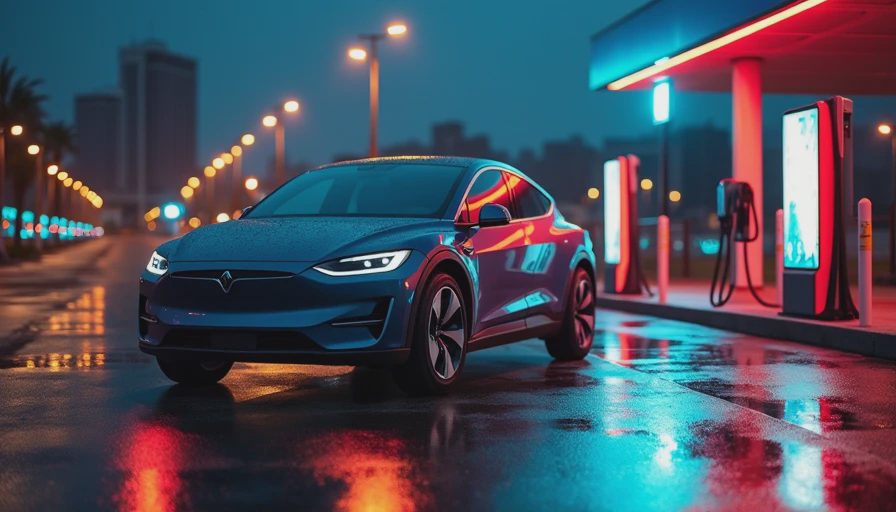
Range, charging, and everyday efficiency
Range is the central question for any 2026 Tesla Model Y buyer. The previous Model Y offered competitive EPA-estimated range, though the exact figure depended on drivetrain, wheels, and trim. Larger wheels generally look better but can reduce efficiency, increase tire costs, and make the ride less forgiving. That is not a Tesla-specific problem; it is a basic trade-off with electric vehicles.
At home, a 240-volt Level 2 charger is the best ownership upgrade. Overnight charging can replace a typical commute without visiting a public station, and electricity usually costs less per mile than gasoline. A driver covering 12,000 miles annually might spend roughly $500 to $900 on home electricity, depending on local rates and efficiency. Public fast charging can be considerably more expensive, especially during peak periods.
Tesla’s Supercharger network remains a major advantage. It is broad, familiar, and generally straightforward to use, although busy travel corridors can still produce queues during holidays. Before buying, confirm that your home electrical panel can support charging and budget approximately $800 to $2,000 for installation, depending on distance, wiring, and local labor.
Cabin comfort and technology
The 2026 Tesla Model Y should appeal to drivers who prefer a clean, screen-centered cabin. Tesla’s interface is quick and visually consistent, and over-the-air updates can add functions without a dealership visit. The large central display handles navigation, media, climate controls, and vehicle settings in one place.
That minimalism has a cost. Basic functions that are physical buttons in a Honda CR-V or Subaru Outback can require menu hunting here. Some drivers will appreciate the uncluttered dashboard; others will consider it a distraction. Before signing a finance contract, spend time adjusting the mirrors, steering wheel, climate settings, and wipers. The interface is not difficult, but it asks you to change familiar habits.
Material quality has improved over the Model Y’s production life, yet the cabin still does not deliver the tactile richness of a Lexus NX or Genesis GV70. Road noise can also be noticeable on coarse pavement. The best version will likely be the one with sensible wheel-and-tire specifications rather than the most visually aggressive option.
Performance and driving character
A 2026 Tesla Model Y should remain quick by ordinary SUV standards. Even a mainstream dual-motor version has historically delivered acceleration that makes merging onto a freeway effortless. The likely appeal is not track-day theater but clean, repeatable thrust in daily traffic. Tesla’s low-mounted battery also helps the vehicle feel planted through sweeping bends.
Do not confuse speed with sophistication. The Model Y’s steering is accurate but not especially communicative, and the ride can become busy over broken city streets. Regenerative braking takes some adaptation, particularly for drivers moving from a gasoline crossover. One-pedal driving is convenient once calibrated, while traditional brake-pedal users can reduce its intensity through the vehicle settings.
There is also a question of independent testing. Until a production car completes verified acceleration, braking, skidpad, and range evaluations, no responsible review should publish exact 0-to-60 or braking claims as fact. Those numbers will tell us whether the new model is genuinely improved or simply more polished.

Ownership costs, insurance, and alternatives
Purchase price will determine whether the 2026 Tesla Model Y is a smart buy or merely an expensive convenience. Tesla pricing can change quickly, and incentives can alter the effective cost by thousands of dollars. Compare the advertised price with destination charges, financing rates, home-charger work, taxes, and insurance rather than focusing only on the monthly payment.
Insurance deserves special attention. Repair costs, sensor calibration, parts availability, vehicle value, and claim history can push Model Y premiums above those for a similarly priced gas crossover. Get quotes before ordering. Progressive, Geico, State Farm, and local carriers can price the same vehicle differently, and a higher deductible can reduce the premium while increasing your out-of-pocket cost after a covered loss.
The competition is stronger than it was a few years ago. The Hyundai Ioniq 5 and Kia EV6 offer distinctive interiors and fast charging. The Ford Mustang Mach-E has a more conventional cabin and familiar dealer network. The Volkswagen ID.4 emphasizes relaxed comfort. A Toyota RAV4 Hybrid remains the practical answer for buyers who cannot charge at home.
What I would check before buying
Before placing an order for the 2026 Tesla Model Y, take these steps:
- Confirm the exact EPA range for the trim and wheel package you want.
- Obtain three insurance quotes using the vehicle identification details supplied by the dealer or Tesla.
- Price a home Level 2 charger, including permits and electrical-panel work.
- Sit in the second row with the front seat adjusted for your normal driving position.
- Test the touchscreen controls at night and on a busy road while parked safely.
- Compare a three-year finance payment with a three-year lease payment, including mileage limits and end-of-term charges.
- Inspect the delivery vehicle in daylight for paint, panel, glass, and trim issues.
This process is less glamorous than watching acceleration videos, but it protects the buyer from the expensive surprises that appear after delivery.
The Verdict: pros, cons, and whether you should actually buy one
Pros. The 2026 Tesla Model Y should offer strong everyday acceleration, a useful hatchback body, efficient electric operation, access to a mature fast-charging network, and software that can improve after purchase. For a driver with home charging and a long commute, those advantages are substantial.
Cons. Pricing and equipment can move quickly, the minimalist cabin is not universally intuitive, ride comfort deserves careful evaluation, and insurance and repair costs can be higher than expected. Official range and independent test data must be confirmed before judging the final car.
Bottom line. Buy the 2026 Tesla Model Y if you want a practical electric crossover, can charge at home, and value seamless road-trip charging more than plush materials or traditional controls. If you need predictable pricing, a softer ride, or dealer-based service, compare the Mach-E, Ioniq 5, and RAV4 Hybrid first. The score, pending production testing, is 7 out of 10: promising and useful, but not yet a car that earns an unconditional recommendation.