From behind the wheel, the first thing you notice is how calmly the Volkswagen Atlas goes about its business. The steering is light but not nervous, the ride has real compliance, and the cabin feels built for people who value room over theater. In a market full of three-row SUVs trying to look athletic, the Volkswagen Atlas is more interested in making the second and third rows usable every day. That is not glamorous, but it is exactly what many shoppers need.
Why the Volkswagen Atlas feels bigger than its specs
The numbers tell part of the story, but the packaging tells the rest. The Volkswagen Atlas offers a genuine three-row layout, easy access to the back seat, and a cargo area that does not force you to play suitcase Tetris. A six-foot adult can spend time in the third row without immediate regret, which is still not a given in this class. The square shape helps, and so does the wide door opening. Families with two child seats and a stroller will appreciate how little drama the loading process creates.
Under the hood, every current Atlas uses a 2.0-liter turbocharged four-cylinder with 269 horsepower and 273 pound-feet of torque, paired with an eight-speed automatic. On paper, that sounds like enough, and in day-to-day traffic it is. In practice, the Volkswagen Atlas is not quick; 0-60 mph in the mid-7-second range is about right, and passing power is adequate rather than urgent. The transmission is smooth, the power delivery is linear, and the SUV never feels strained unless you are trying to hustle a full load up a steep grade.
That balance matters because most Atlas buyers are not chasing lap times. They want easy visibility, straightforward controls, and a cabin that works on a school run, a Costco run, and a weekend road trip. The Atlas delivers those things with less fuss than many rivals.

The cabin is where the Volkswagen Atlas earns most of its points
Inside, the Volkswagen Atlas leans more useful than rich, but it avoids the cheap feeling that used to haunt some older VW interiors. The dashboard design is tidy, the infotainment screen is large and legible, and the touch points are generally good. Wireless Apple CarPlay and Android Auto are available, and the steering-wheel buttons and climate controls are easier to live with than the fully touch-sensitive setups some competitors tried a few years ago.
Storage is strong. There are usable cupholders, sensible door bins, and a center console that can actually swallow real stuff. If you spend time shuttling kids, sports gear, or work bags, the Volkswagen Atlas makes routine life simpler. The second row slides and folds easily, which matters more than a lot of brochure copy suggests. I also like the fact that visibility stays good even with passengers and cargo aboard; you do not sit in this SUV feeling boxed in.
Fuel economy is respectable for the size, not spectacular. Around-town driving and freeway commuting can return roughly 22 to 24 mpg in mixed use if you are gentle with the throttle. Push harder, or spend more time in stop-and-go traffic, and the number drops. That is the price of a big, upright three-row SUV with real space inside. The upside is that the chassis feels settled, and the ride quality remains one of the Atlas's best calling cards.
What it does well, and where it stumbles
Drive the Volkswagen Atlas on a rough freeway or a broken suburban street and you notice the suspension tuning first. It takes the edge off sharp impacts without turning floaty, and that is the right answer for a family hauler. The body motions are controlled enough that passengers will not be bobbing around, but the Atlas does not pretend to be sporty. Push into a corner and there is more lean than a Toyota Grand Highlander or a Kia Telluride, though the steering remains predictable and the brakes feel reassuring.
That is the larger truth here: the Volkswagen Atlas is a competence vehicle, not a charisma play. It favors space, visibility, and comfort over personality. If you value a more polished cabin or a stronger sense of style, the Honda Pilot and Telluride have an edge. If you want the most cargo-friendly shape in the class, the Chevrolet Traverse is the bigger body to beat. Still, the Atlas has a plainspoken honesty that many shoppers will find refreshing.
Safety and driver-assist tech are competitive, with features such as adaptive cruise control, lane centering assistance, blind-spot monitoring, and automatic emergency braking available depending on trim. The systems are useful without getting in the way, which is about all most drivers want. Road noise is kept in check better than you might expect, though the engine can sound coarse when pushed hard. It is a reminder that this SUV is built around utility first.
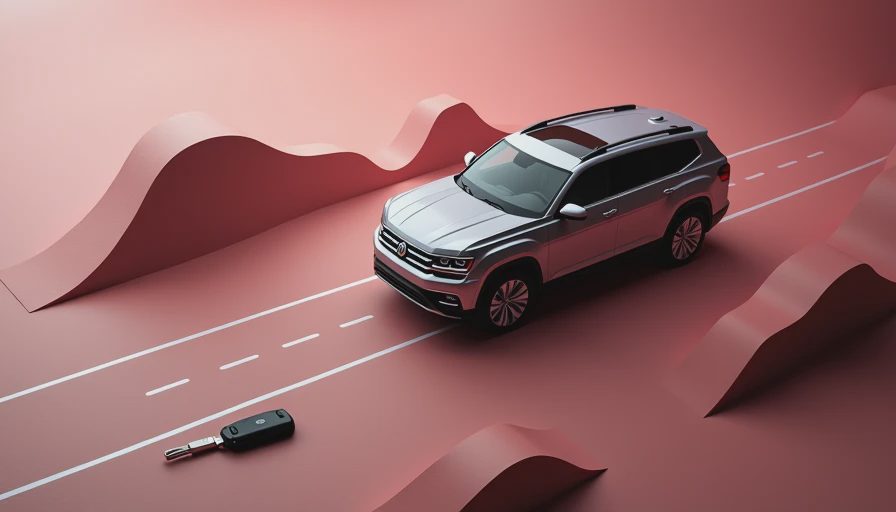
Shopping advice and trim strategy
If you are shopping the Volkswagen Atlas, the sweet spot is usually one of the mid-level trims rather than the cheapest sticker you can find. The base price starts in the low 40s, and well-equipped versions can climb into the low 50s once options and packages are added. That puts it right in the thick of the three-row market, where the Traverse, Pilot, and Grand Highlander all deserve a look.
I would focus on the trim that gets you the features you will actually use: power liftgate, heated seats, better headlights, and the driver-assist package. If you care about appearance, the R-Line treatment adds visual punch, but it is worth paying for only if you like the look enough to see it every day. Otherwise, buy the more rational trim and spend the difference on maintenance, winter tires, or a long road trip. For shoppers cross-shopping minivans, the Atlas has one big advantage: it still looks like an SUV and drives with a little more upright presence than a family van. For shoppers coming from midsize two-row crossovers, the extra room will feel almost luxurious. That is where the Volkswagen Atlas makes its case most clearly.
Verdict
The Volkswagen Atlas is not the sharpest or the quickest three-row SUV you can buy, but it may be one of the easiest to live with. It gives you real third-row usability, a calm ride, and a cabin layout that makes sense on a stressful Tuesday, not just on a test-drive Saturday. The compromises are real: the powertrain is merely adequate, the personality is plain, and the fuel economy is only average for the class. Still, those are fair trades if your priority is space and day-to-day sanity. My score: 7.5 out of 10. If you want the kind of SUV that does the job without drama, the Volkswagen Atlas belongs on your short list.