From behind the wheel, the first thing you notice is the sound. The Ferrari 360 Challenge Stradale doesn't just start—it snarls. This is Ferrari's early-2000s answer to the Porsche 911 GT3: a lightweight, focused version of the 360 Modena with track-ready upgrades that still make it a collector's darling today. In this article, we dig into the **Ferrari 360 Challenge Stradale specs** that define its character and tell you whether it's worth the premium over a standard 360 Modena.
Engine and Performance Specs
The heart of the Challenge Stradale is a 3.6-liter V8 (F131) tuned to produce 425 horsepower at 8,500 rpm and 275 lb-ft of torque at 4,750 rpm. That's a 25-hp bump over the standard 360 Modena, achieved through revised intake and exhaust systems, higher compression ratio, and a more aggressive ECU calibration. The engine redlines at 8,500 rpm and sings a mechanical symphony that's unmistakably Ferrari.
Transmission options include a six-speed F1-style paddle-shift automated manual—the same unit used in the 360 Challenge race car—and a rare six-speed manual gearbox. The F1 version shifts in 150 milliseconds, delivering lightning-fast gear changes. Performance figures: 0–60 mph in 4.0 seconds, 0–100 mph in 9.1 seconds, and a top speed of 186 mph. Observed fuel economy? Let's just say single digits on track, but you don't buy this car for the mpg.
These **Ferrari 360 Challenge Stradale specs** put it squarely in GT3 territory. The engine's response is instant, and the sound—oh, that sound—is pure Motorsport. It's a high-strung V8 that begs to be wrung out.
Chassis, Weight, and Aerodynamics
Ferrari's engineers didn't just throw more power at the 360; they shed nearly 250 pounds compared to the standard Modena. The Challenge Stradale tips the scales at a dry weight of 2,820 pounds (approximately 3,050 pounds curb weight). Weight savings come from thinner body panels, lighter glass, carbon-fiber racing seats, and the deletion of sound deadening, a radio, and a glovebox. Yes, no glovebox.
The chassis remains an aluminum spaceframe, but with stiffer springs, thicker anti-roll bars, and a 0.6-inch lower ride height. Adaptive dampers were swapped for fixed-rate racing units. Aerodynamics get a serious upgrade: a deeper front splitter, a prominent rear diffuser, and a fixed carbon-fiber rear wing. High-speed downforce improves stability without adding drag. The result is a car that feels planted at triple-digit speeds and responds telepathically to steering inputs.

Interior and Creature Comforts
Climb inside and the message is clear: this is a driver's tool. The interior is stripped to the essentials. Carbon-fiber racing shells replace the standard seats, trimmed in Alcantara with four-point harness cutouts. The steering wheel is a thick-rimmed unit with a red LED shift light. There's no carpet on the floors—just rubber mats. The optional stereo was a dealer-installed afterthought. Even the door panels were lightened with pull-straps instead of handles.
But it's not entirely spartan. You get air conditioning, power windows, and a basic instrument cluster with a yellow tachometer. The carbon-fiber trim is genuine, not appliqué. The smell of leather and racing fabric greets you every time you open the door. It's a special place, even by today's standards.
On the Road: Driving Impressions
On public roads, the Challenge Stradale is a car you have to respect. The ride is firm—very firm—over broken pavement. The steering is hydraulic, with immense feel and zero power assistance that was artificially light. You feel every camber change through the wheel. The brakes are carbon-ceramic units that require heat to work well; cold, they're grabby. But once everything is up to temperature, the Stradale transforms.
From behind the wheel, the first thing you notice (after the sound) is how light it feels. It changes direction with the eagerness of a Lotus Elise. The chassis communicates everything: grip levels, slip angles, and the exact moment the rear tires start to squirm. The F1 gearbox snaps off shifts with a satisfying thunk. It's not as seamless as a modern dual-clutch, but it's far more engaging.
Track driving is where the **Ferrari 360 Challenge Stradale specs** truly shine. At Willow Springs, it was quicker than a contemporary 911 GT3 and stayed with a 360 Modena Challenge race car for several laps. The brakes never faded, and the engine pulled hard all the way to redline. It's a car that rewards smooth, precise driving. Try to muscle it, and it'll bite. But drive it with finesse, and you feel like Senna.
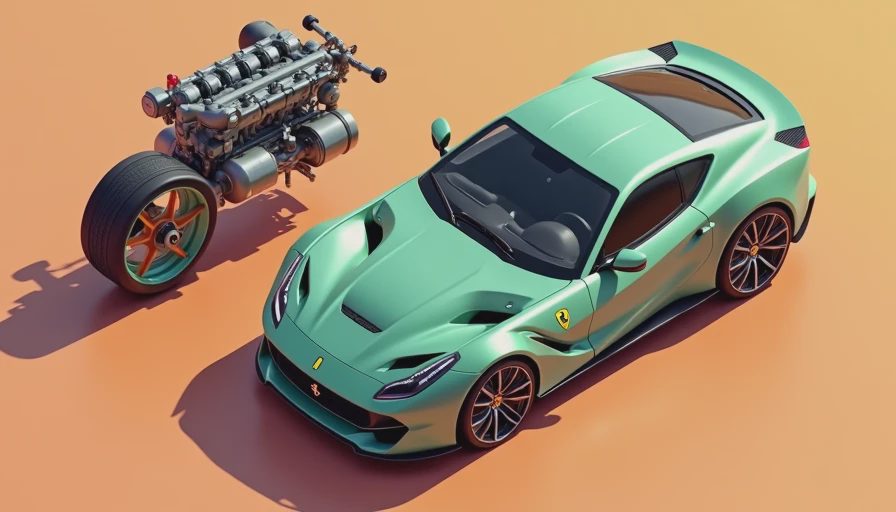
The Verdict: Pros, Cons, and Whether You Should Actually Buy One
Is the Ferrari 360 Challenge Stradale worth the premium over the standard 360 Modena? For the right enthusiast, absolutely. Here's the breakdown.
Pros
- Incredible engine sound and response
- Lightweight, razor-sharp chassis
- Proven track capability
- Strong collectible value (prices have risen 30% in the last five years)
Cons
- Stiff ride for daily driving
- No radio or glovebox (seriously)
- High maintenance costs (typical Ferrari ownership)
- F1 gearbox can be unreliable; manuals are rare and expensive
Bottom line
If you want a pure, unfiltered Ferrari experience—and you're willing to tolerate its quirks and costs—the Challenge Stradale is one of the last great analog Ferraris. It's a car that connects you to the road (and track) in a way that modern hypercars cannot. Used prices currently range from $220,000 to $280,000, depending on condition and history. That's a lot for an early-2000s car, but the **Ferrari 360 Challenge Stradale specs** justify the price for those who know.
**Score: 8/10**
*The Verdict: pros, cons, and whether you should actually buy one.*